Russian debt and payment troubles surge, intelligence report says

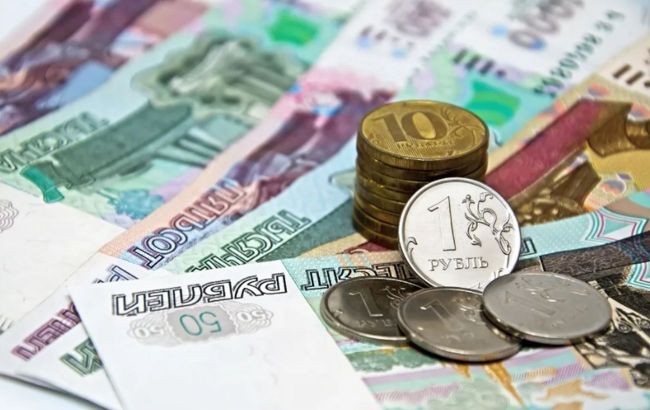 Photo: Russian ruble (Getty Images)
Russia's corporate sector has accumulated over $117.5 billion in overdue accounts receivable. By the end of February this year, the share of problem payments reached 6.7%, which amounts to about 3.8% of the country's GDP, according to Ukraine's Foreign Intelligence Service.
According to data based on the Financial Stability Review of the Central Bank of the Russian Federation for the fourth quarter of 2025 and the first quarter of 2026, the most difficult situation is in the extractive industry, where the share of overdue payments exceeded 8%. In manufacturing and trade, this figure approached 7%.
The Foreign Intelligence Service notes that these are precisely the sectors that Russian authorities traditionally position as the foundation of their war economy's resilience, yet they are the ones generating the largest volume of non‑payments.
Despite this, the Central Bank of Russia continues to assure markets that there are no systemic risks to financial stability. At the same time, the regulator acknowledges the deterioration of the corporate sector's financial indicators.
The intelligence service draws particular attention to the fact that a significant portion of non‑payments is being generated outside the banking system. Russian companies are increasingly using payment deferrals among themselves, effectively replacing bank lending with inter‑corporate loans.
Such a mechanism helps maintain the appearance of business activity but only postpones the accumulated problems. As a result, enterprises are becoming increasingly dependent on expensive short‑term financing, cutting investment programs, and shifting financial pressure onto suppliers and contractors.
The intelligence service emphasizes that small and medium‑sized enterprises remain the most vulnerable in this situation. The growing share of problem debt increases the risk of bankruptcies and large-company takeovers.
"Corporate Russia is slowly cannibalizing itself," the Foreign Intelligence Service noted.
Russia's economy contracted by 0.3% in the first quarter of 2026, and Belarus's by 0.4%. Both countries entered the year with optimistic growth forecasts, but the result turned out to be the opposite.
However, the statements by Kremlin leader Vladimir Putin at the recent St. Petersburg International Economic Forum were quite optimistic, contradicting the actual indicators.