Russia's economy contracts, dragging Belarus into slowdown

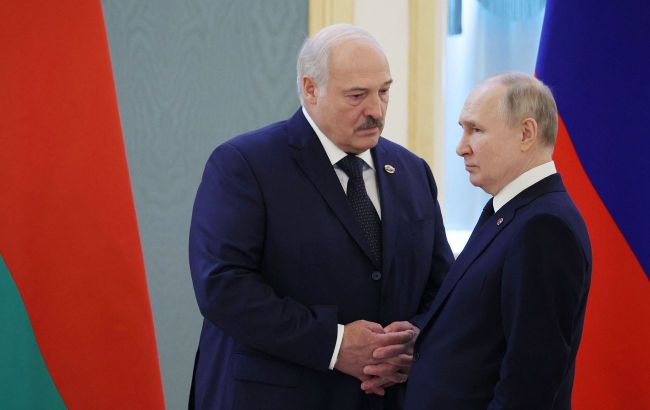 Belarusian President Alexander Lukashenko and Russian President Vladimir Putin (photo: Getty Images)
Russia's economy contracted by 0.3% in the first quarter of 2026, while Belarus' economy shrank by 0.4%. Both countries entered the year with optimistic growth forecasts, but the outcome turned out opposite, according to Ukraine's Foreign Intelligence Service.
Why are economies declining
The key reason is the Russian Central Bank's fight against inflation. An increase in the key interest rate sharply raised the cost of loans for businesses and industry, slowing down production.
Since Belarus is tightly tied to the Russian market, it is feeling the crisis together with its neighbor, and without its own tools to overcome it.
Stagflation instead of growth
Belarus's ambitious five-year plan for 15% growth now looks like fiction. Instead, the country faces stagflation: the economy is shrinking while prices are rising.
Last year, a Polish grocery basket cost only 8% more than a Belarusian one, while a few years ago the gap reached 30%. If the trend continues, Belarusian stores may become more expensive than Polish ones.
What will happen after the war?
Even the end of the war will not bring quick recovery for Russia because of deep structural problems. Consequences for Belarus may be even more painful: while Russia supports the Belarusian economy during the war, after the war, it will seek compensation — primarily human capital and a share of the Belarusian market, pushing out local businesses in favor of Russian ones.
Earlier this year, the intelligence service released new intercepted materials showing the critical condition of Russia's regional budgets.
At the same time, recent data showed that trust in Vladimir Putin among Russians fell to the lowest level since the start of the full-scale invasion of Ukraine. Even official polls point to this.