Russia wants non-aggression pacts with NATO countries under new security framework

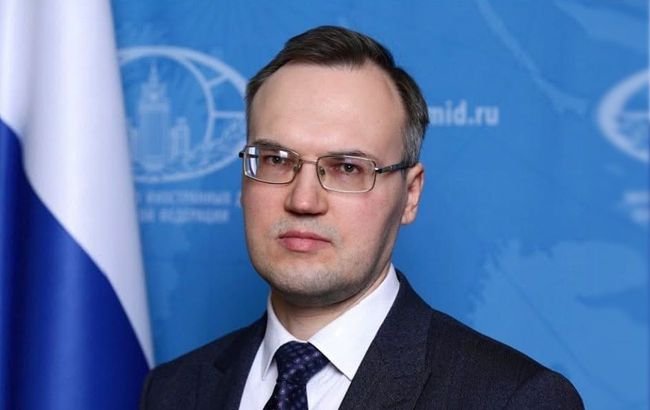 Photo: Alexey Drobinin, director of the Russian Foreign Ministry's Department of Foreign Policy Planning (Russian media)
Russia is open to concluding non-aggression pacts with individual NATO countries. Such agreements could become part of a new European security architecture that Moscow is proposing to discuss in the context of the peace process on Ukraine, Reuters reports.
Russian Foreign Ministry senior diplomat Alexey Drobinin outlined three possible formats for future agreements. He presented them at a security conference in Moscow.
The first option involves establishing a collective defense alliance or concluding bilateral mutual assistance agreements. As examples of such arrangements, Drobinin cited the agreements Russia has with Belarus and North Korea.
The second format involves political agreements under which the parties would pledge not to assist each other's adversaries in the event of aggression. Moscow has a similar treaty with Iran.
The third option proposed by the Russian diplomat is bilateral non-aggression pacts. According to him, such agreements could be concluded with individual NATO member states, among others.
"For example, agreements of this kind could be reached, among other things, with individual NATO member states, which would then receive, for instance, additional individual security guarantees from the Russian Federation," Drobinin said.
At the same time, the diplomat did not specify which NATO countries Moscow would like to see participate in such agreements or under what conditions it proposes concluding them.
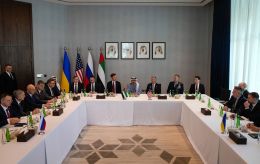
Russia's chief negotiator, Vladimir Medinsky, also raised the issue of a new European security architecture. According to him, the issue was central to the two-day talks in Abu Dhabi.
The idea of broader agreements on European security has drawn mixed reactions from European politicians. Some believe such discussions should only begin after progress has been made toward resolving the war in Ukraine, particularly on a ceasefire.