Russia unveils two new interceptor drones to counter Ukrainian UAVs

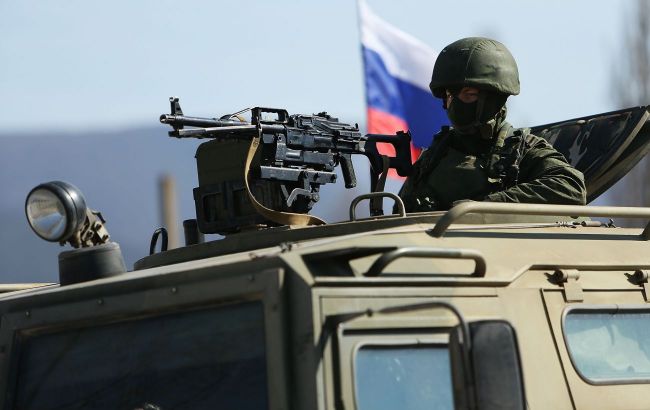 Photo: Russian units (Getty Images)
Russia has announced two new anti-aircraft interceptor drones – the Sokol-I and Molniya-PVO. They are allegedly designed to destroy Ukrainian UAVs, including the Hornet, reports Defense Express.
Sokol-I: Characteristics and doubts
According to Russian sources, the drone has:
- Flight speed – up to 150 km/h;
- Flight altitude – up to 5,000 meters;
- Foam plastic body;
- A warhead with proximity fuzing or kinetic – for ramming the target;
- Daytime and thermal imaging cameras for target detection.
The main purpose is to destroy strike and reconnaissance fixed-wing UAVs: Leleka, Bulava, and Hornet.
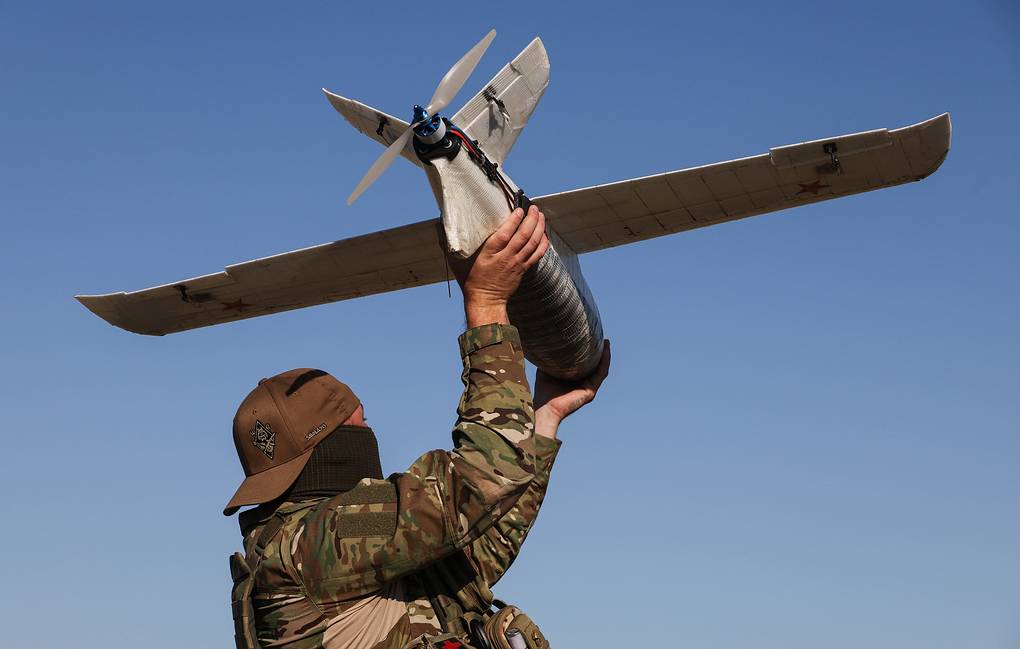
Photo: Russian soldier with the anti-aircraft drone Sokol-I (Defence Express)
However, a question immediately arises: the cruising speed of the Hornet is the same 150 km/h, and when approaching a target, it accelerates to 200 km/h. That is, the Sokol-I may physically not have time to catch up with its target.
Another key parameter – flight duration – is not disclosed by the Russians. It is precisely this that determines how many attempts operators will need to achieve a hit.
Molniya-PVO: Less data
The name directly indicates the base – the Molniya drone family. Externally, it looks like a twice-reduced copy of the twin-engine version.
Payload – up to 1 kilogram. Can be launched from a catapult or by hand. Designed to intercept heavy bombers and fixed-wing UAVs.
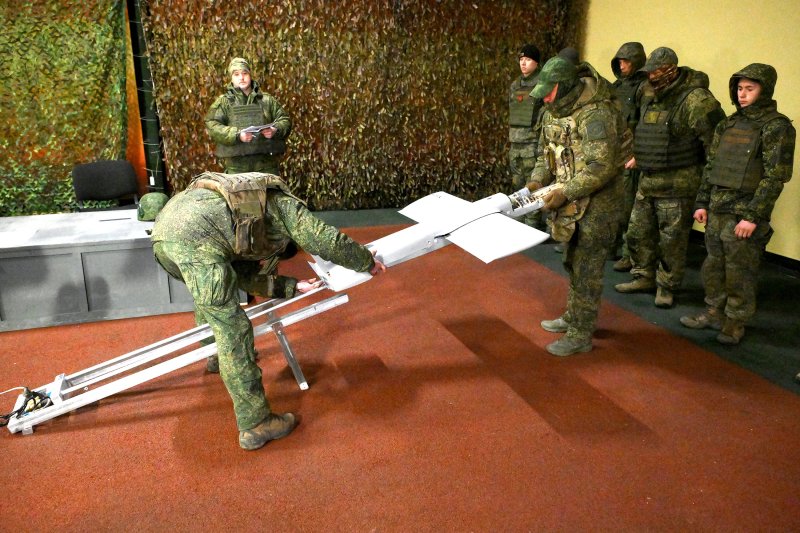
Photo: Russian soldiers with the anti-aircraft drone Molniya-PVO (Defence Express)
Questions regarding the number of launches required to meet the target and the production scale remain open.
The emergence of new anti-aircraft drones is Russia's reaction to the growing threat from Ukrainian UAVs. Putin recently boasted about the Russian air defense system, although on the same day, there were strikes on St. Petersburg.
Meanwhile, Air Force spokesman Yurii Ihnat explained why intercepting Ukrainian drones is difficult: Shahed drones fly at an altitude of 10-20 meters above the ground, using the terrain and building complex routes.