Russia tries to jam Starlink to disrupt Ukrainian strikes, Reuters reports

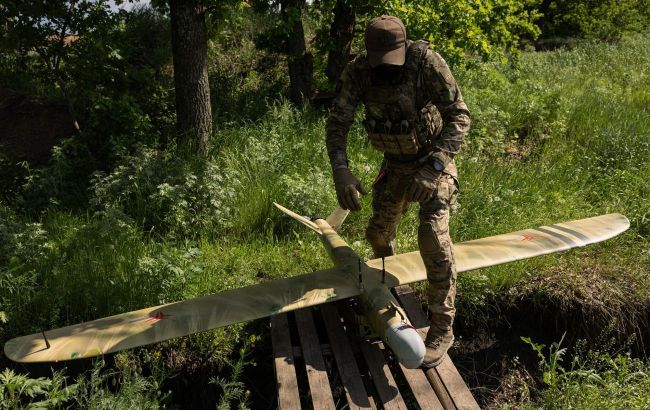 Photo: Ukrainian soldier (Getty Images)
Russian forces are trying to protect their logistics from Ukrainian drones. They are disguising fuel shipments as civilian cargo and attempting to jam Starlink communications, Reuters reports.
Most Ukrainian medium-range strikes rely on Starlink systems. For a long time, they proved resistant to electronic interference, but Russian forces have now begun deploying Volna Kupol Garant electronic warfare systems.
These systems are capable of blocking signals across an area of about 20 square kilometers. Ukraine's Defense Forces have already identified around a dozen such installations, which have now become priority targets for Ukrainian drones.
In particular, soldiers from the 422nd Unmanned Systems Regiment, working together with the Security Service of Ukraine (SBU), have already destroyed two such stations. A drone crew commander with the callsign "Dyryhent" said that as soon as the enemy system was destroyed, Ukrainian drones immediately regained a stable connection and continued their flight.
Fuel in milk tankers and civilian vehicles
In addition to electronic countermeasures, Russian forces are also resorting to logistical trickery.
"We hit water tankers, and the tankers were burning because there was gasoline inside. We've hit painted-up milk trucks that had diesel fuel in them," said Major Mykola Kolesnyk, commander of the 422nd Regiment.
According to Ukrainian intelligence and military officials, Russian forces have stopped moving in large convoys. Instead, they now transport fuel, ammunition, and food to the front in small batches using civilian passenger cars, quadbikes, and motorcycles. They travel along smaller roads to make detection more difficult.
In addition, Russian forces are concealing their supplies at abandoned farms, in building basements, and even at ordinary civilian gas stations.
What analysts say
Rob Lee, a senior fellow at the US-based Foreign Policy Research Institute, believes Ukraine's medium-range drone strikes are one of the most significant developments on the battlefield this year.
At the same time, he warned that Russia is learning to adapt. According to Lee, if Russian forces manage to scale up production of their jamming systems, it could seriously complicate Ukraine's ongoing campaign to disrupt Russian logistics.
As previously reported, between July 1 and July 8, Ukraine's Unmanned Systems Forces struck 50 energy facilities in temporarily occupied Crimea and southern Ukraine. The strikes also targeted a ferry in Kerch, a cargo ship, and 19 tankers belonging to Russia's so-called shadow fleet.
The Financial Times also reported that Ukrainian drones are striking Russia's energy infrastructure with unprecedented intensity. The campaign has already triggered a severe gasoline shortage in Russia.