Russia's upgraded Iskander missiles can now strike anywhere in Ukraine, expert warns

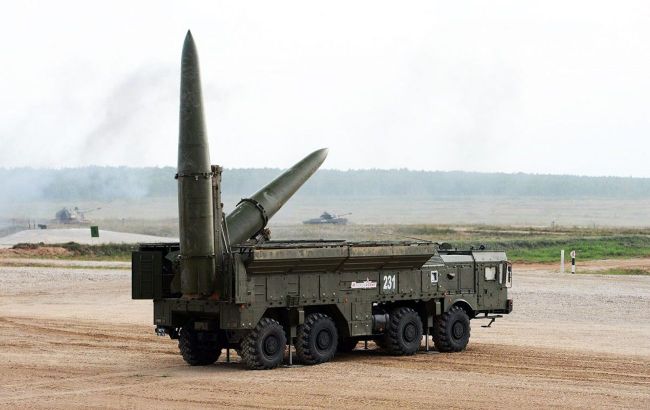 Photo: Russia is upgrading Iskander-M missiles (armyinform.com.ua)
Russia is actively upgrading its Iskander-M operational-tactical missile system, with ballistic missile production reaching as many as 60 units per month as of spring 2026, Colonel Oleksandr Zaruba, chief research fellow at the State Research Institute for Testing and Certification of Weapons and Military Equipment reports.
Zaruba outlined three main areas of modernization for the Iskander-M missile system:
- improving resistance to modern air defense systems, especially Patriot;
- increasing range;
- scaling up production under sanctions.
According to him, the missile is equipped with an upgraded 9B899 module that deploys decoys, chaff reflectors, and thermal flares during the terminal phase of flight.
These decoys imitate the missile’s signature and overload the radar systems of surface-to-air missile complexes tasked with intercepting such threats.
The onboard systems have been adapted to operate in active scanning mode and detect blind spots in air defense radar coverage. The software is updated regularly.
New missile variants produced after 2023-2024 use a faster image-processing processor, increasing the likelihood of target recognition, detection, and successful engagement. The role of optical correction using digital terrain imagery has also been enhanced, improving accuracy.
"It has been claimed that the missile’s range can be increased to 1,000 kilometers in the latest modernization. This means the missile could strike targets anywhere in Ukraine," Zaruba emphasized.
He added that to simplify production, the Iskander manufacturing cycle now incorporates elements and technical solutions previously used in North Korea’s KN-23 missiles.
"Production has reached 60-70 units per month. The share of Russian-made electronic components in the missile has increased to 90%, although Western electronics are still present. There are seven warhead variants, including penetrating and bunker-busting versions, which are being used against airfields to target our tactical aviation. Particular efforts are being made to locate F-16 aircraft," the specialist said.
Zaruba noted that the Iskander-M has evolved into a sophisticated quasi-ballistic system that is actively adapting to counter air defense systems during combat operations.
Russia upgrades Kh-101 missiles
Earlier, we reported that Russia is producing dozens of Kh-101 cruise missiles every month, and many of them are launched against Ukraine almost immediately after leaving the production line.
In addition to missiles, Russia is increasing the use of upgraded aerial bombs. Soviet-era bombs are being converted into guided glide bombs equipped with UMPK guidance kits. The use of cluster aerial bombs has also been recorded.
At the same time, Russia is developing an intermediate type of munition positioned between a glide bomb and a drone. Overall, the Russian military-industrial complex continues to significantly expand production of aerial attack weapons.