Russia’s secret tanker schemes tied to Singapore, traders say

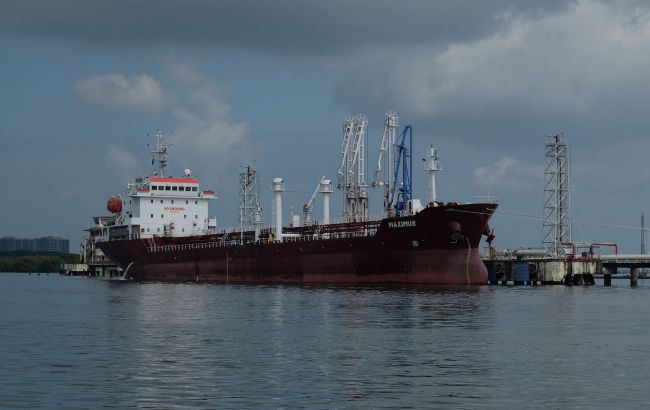 An oil tanker in India (Illustrative photo: Getty Images)
Russian shadow fleet tankers are increasingly listing Singapore as their official destination, indicating a shift in export routes and Moscow’s attempts to conceal final buyers amid Western sanctions, Reuters reports.
According to traders, LSEG shipping data show that in January, tankers carrying about 1.4 million metric tons of Russian crude oil declared Singapore as their destination - the highest monthly figure in recent years.
Market participants say that in practice, many of these vessels never call at Singapore. Instead, they unload oil near the Malaysian coast or transfer it to floating storage. Singapore is thus used as a formal or temporary waypoint to mask the ultimate buyers.
“The rise in tankers listing destinations such as Singapore, Suez, or Port Said signals mounting difficulties with sales and a shrinking pool of reliable buyers,” said a Moscow-based oil trader.
This shift in routes comes amid expectations that Russian oil imports will be reduced, or even halted, following a recent trade deal with the US. If that scenario plays out, China could become virtually Russia’s only major buyer.
However, according to traders, Chinese state-owned oil companies remain cautious about buying spot cargoes of Russian oil due to the risk of secondary sanctions, further limiting Moscow’s export options.
Previously, tankers sailing from Russia to India often listed Egypt’s Port Said or the Suez Canal as their destination. Now, the use of vague or provisional ports has increased significantly, as companies seek to conceal their actual supply routes and reduce sanctions risk.
Fighting Russia’s shadow fleet
Russia’s shadow fleet is a network of old tankers and shell companies that Moscow uses to bypass sanctions. These vessels often change destinations, switch off transponders, and list provisional ports, such as Singapore, to hide the real buyers of Russian oil.
Recently, at least eight sanctioned oil tankers passed through the English Channel, despite the UK government’s announced efforts to crack down on the shadow fleet.
The EU is preparing a new sanctions package to block Russia’s shadow fleet, which enables Moscow to continue generating revenue from oil exports.
RBC-Ukraine reported on February 9 that Ukrainian forces struck nearly 50 oil facilities inside Russia in January, cutting oil processing by 19%.