Russia's oil production falls to lowest level in 18 months

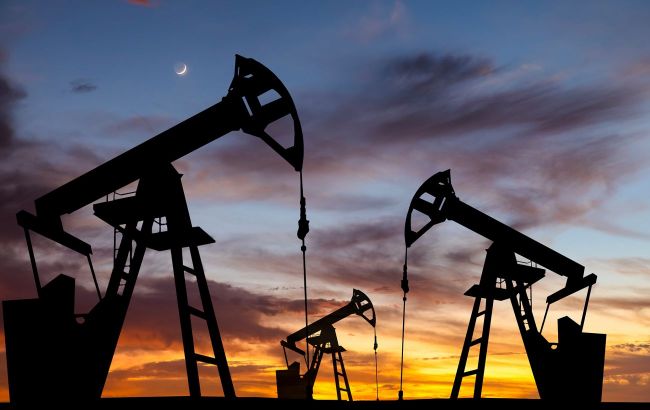 Illustrative photo: Russian oil production falls to lowest level in 18 months (Getty Images)
Russian oil companies sharply cut crude oil production in December 2025, recording one of the worst levels in the past 18 months, according to Ukraine’s Foreign Intelligence Service.
Production falls to an 18-month low
Average daily output dropped to 9.326 million barrels, occurring amid increased Western sanctions pressure on buyers of Russian crude.
The current production level is more than 100,000 barrels per day below November’s output and nearly 250,000 barrels short of Russia’s OPEC+ quota.
Russia fails to meet the OPEC+ quota
The production cut is the largest since June 2024, indicating not seasonal or technical factors, but deepening structural problems in Russia’s oil sector.
Russia’s OPEC+ quota stands at 9.574 million barrels per day, but under current conditions, companies lack economic incentives to return to that level.
Exports are increasingly difficult
Exporting Russian oil abroad is becoming increasingly challenging. Although exports from Russian ports are formally maintained at around 4 million barrels per day, a significant portion of the crude is not finding end buyers.
Since late November 2025, the volume of unsold Russian oil, mostly accumulating at sea, has increased by about 30 million barrels to 185 million barrels, raising logistical and financial risks for producers.
Price drop reduces profitability
Another limiting factor is the fall in global oil prices, which sharply reduces the profitability of production.
Under these conditions, Russian companies are effectively uninterested in increasing output despite formal OPEC+ obligations.
Budget risks for the Kremlin in 2026
Taken together, these factors point to a systemic crisis in Russia’s oil sector. Even if prices stabilize, Russia is unlikely to return to its OPEC+ quotas quickly.
This implies a shortfall in foreign currency revenues and increased pressure on the federal budget in 2026. In response, the Kremlin may resort to higher taxes, more active use of debt instruments, or cuts in investment — measures that will only deepen the industry’s decline.
Sanctions against Russia
At the end of October, the United States imposed sanctions on two Russian oil giants, Lukoil and Rosneft. The restrictions hit all of the companies’ foreign assets hard and caused a significant drop in their market capitalization.
At the same time, Ukraine implemented its own measures. Two tankers from Russia’s so-called shadow fleet, Kairos and Virat, were struck by SBU Sea Baby drones equipped with enhanced warheads. The operation was carried out jointly by the SBU’s 13th Main Directorate of Military Counterintelligence and the Ukrainian Navy.
As of early January 2026, due to sanctions pressure, Russia’s weekly oil export revenues have fallen by approximately $500 million. In addition, US President Donald Trump supported a bipartisan bill proposing new sanctions on Russia, including the introduction of 500 percent tariffs for buyers of Russian energy resources.