Russia's oil export revenues fall to lowest level since start of Ukraine war - Bloomberg

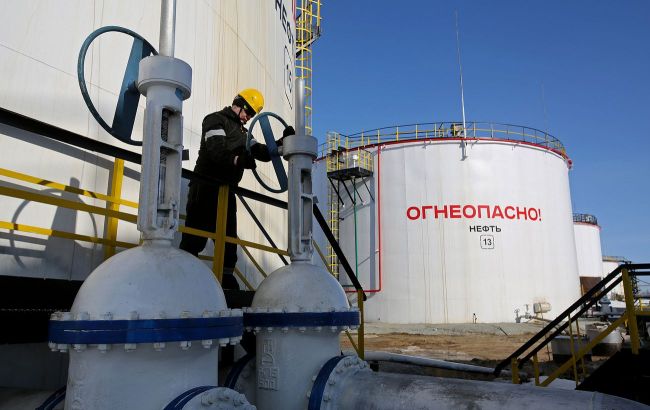 Russia's oil exports fell by 850 thousand barrels per day (photo: Getty Images)
Russia's oil export revenues fell last month to the lowest level since the full-scale invasion of Ukraine, Bloomberg reports.
This was influenced both by Western sanctions, which limited sales and forced the aggressor country to offer large discounts on oil, and by successful Ukrainian strikes on Russia's oil infrastructure.
Drop in export revenues
The agency notes that last month, Russia earned 9.5 billion dollars from exports of crude oil and oil products. This is 1.5 billion dollars less than the January figures.
Total volume of oil exports fell by 850 thousand barrels per day, to 6.6 million barrels, which is also the lowest level since the start of Russia's full-scale invasion of Ukraine in 2022.
The decline last month occurred after the introduction of even bigger discounts on Russian oil. The United States increased pressure on the aggressor country, which complicated the sale of its oil on global markets.
Successful Ukrainian strikes
Ukrainian strikes on Russia's oil infrastructure and fuel plants reduced oil refining volumes by about 300 thousand barrels per day, to 5.1 million barrels per day in February. In addition, this also contributed to the reduction of crude oil exports.
As a result, daily crude oil production in the aggressor country decreased by 710 thousand barrels to 8.55 million barrels per day. Earlier this week, Russian production in February was estimated at 9.184 million barrels per day.
At the same time, Bloomberg notes that war in the Middle East may lead to an increase in demand for Russian oil, as several countries in the region are reducing their own production.
The Foreign Intelligence Service of Ukraine reported that the Russian economy has entered a phase of deepest crisis in the last 20 years, which is compared with scenario of the late Soviet Union.
According to intelligence data, in 2025, industrial growth in Russia effectively stopped (fell from 4–6% to 0.8%), while rail freight transportation decreased to the lowest level in 16 years.