Russia's new Monokhrom missile may use AI powered by US-made Nvidia computer

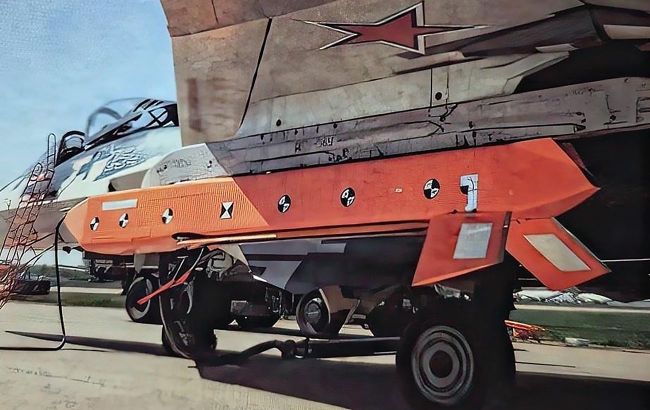 Russia's Monokhrom missile may support artificial intelligence thanks to a US-made computer (photo: Russian media)
An Nvidia Jetson microcomputer that could enable artificial intelligence operations was found in Russia's new Monokhrom missile, according to the Main Directorate of Intelligence of the Ministry of Defense of Ukraine.
The Nvidia Jetson Orin computer module found in Russia's new S-71 Monokhrom air-launched cruise missile may indicate the use of artificial intelligence technologies in the missile.
Military intelligence also published 35 new electronic components identified in samples of weapons used by the enemy.
Among the identified components:
-
Parts of a passive radar seeker that Russia began installing on Geran-2 unmanned aerial vehicles to detect and strike surface-to-air missile systems and radar stations;
-
A Chinese Honpho TS130C-01 camera from a Geran-4 jet-powered unmanned aerial vehicle;
-
Components of the active homing head of the Kh-47M2 Kinzhal aeroballistic missile.
Specialists from the Main Directorate of Intelligence and colleagues from Ukrainian research institutions continue to study Russian weapons and determine the origin of their electronic components.
These data help Ukraine and its partners identify critical foreign technologies used in Russian weapons and strengthen measures to block their supply to the aggressor country.
In early August, it became known that the Russians made Shahed drones even more dangerous by equipping the Geran-4 Seeker jet-powered drone with a new guidance system and an electro-optical module for more accurate strikes on targets even if communication is lost.
In addition, Russian forces used depleted uranium munitions against Ukraine, equipping Geran-2 attack drones with them. Dangerous elements were discovered during attacks on the Chernihiv region.