Russia restarts military deliveries to Syria after Assad’s fall

 The shipments may be linked to the future of Russian bases in the country (Photo: Getty Images)
The Russian cargo ship Sparta arrived at the Syrian port of Tartus on May 11, escorted by warships. This is the first visual confirmation of the resumption of Russian military shipments to Syria after the fall of Bashar al‑Assad’s regime, according to OSINT projects InsiderGeo and SONARROW_OSINT.
What is known about the convoy
Next to the Sparta, the frigate Admiral Kasatonov was captured in satellite images.
On the eve of the convoy’s arrival, the corvette Stoikiy left Tartus to secure a safe corridor.
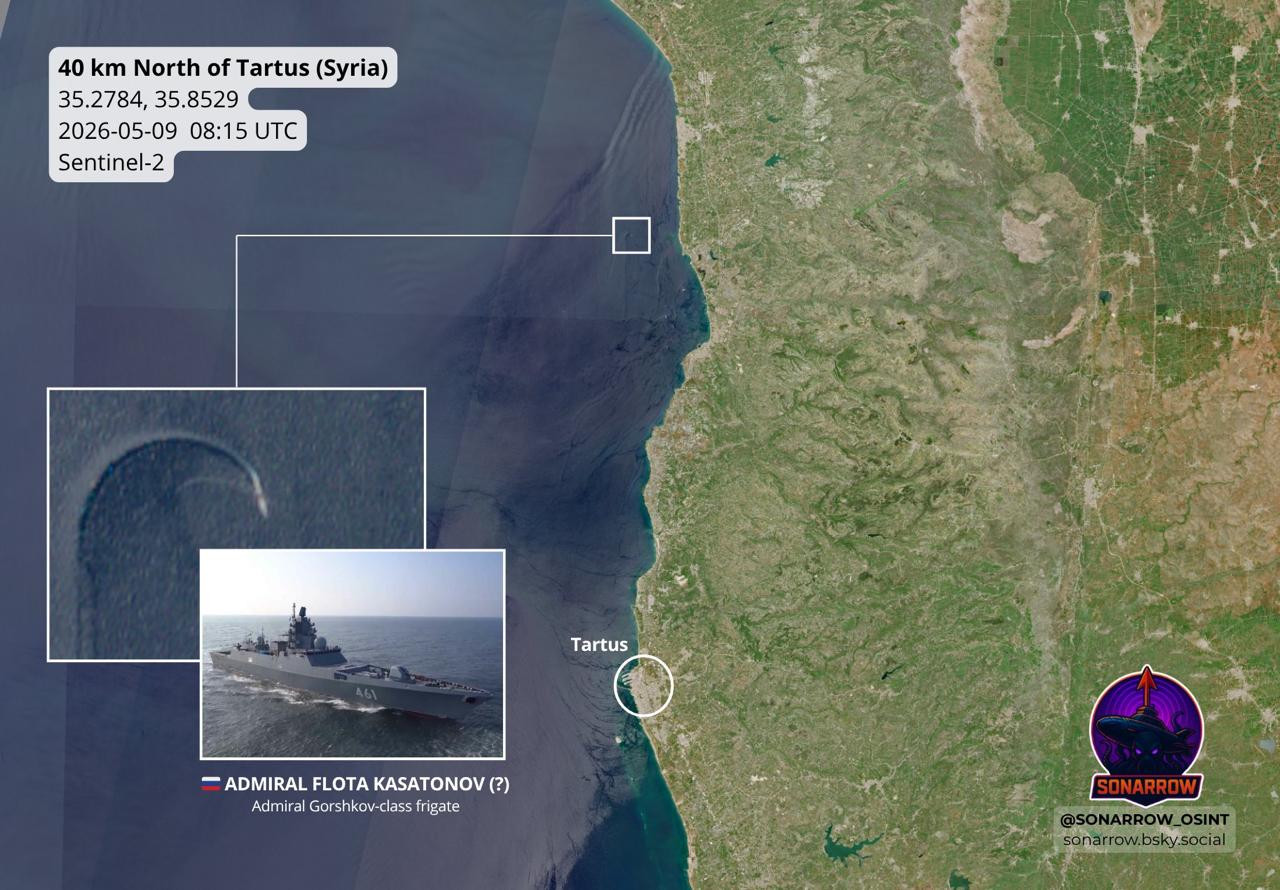
Photo: Russian frigate Admiral Kasatonov (t.me/agentstvonews)
What exactly the ship was carrying is unknown, but researchers suspect it is either military cargo or dual‑use equipment.
Concealment measures
The convoy took strict security precautions. After passing Gibraltar, all ships turned off their transponders. At least two vessels transmitted false location data — claiming to be in the Baltic Sea.
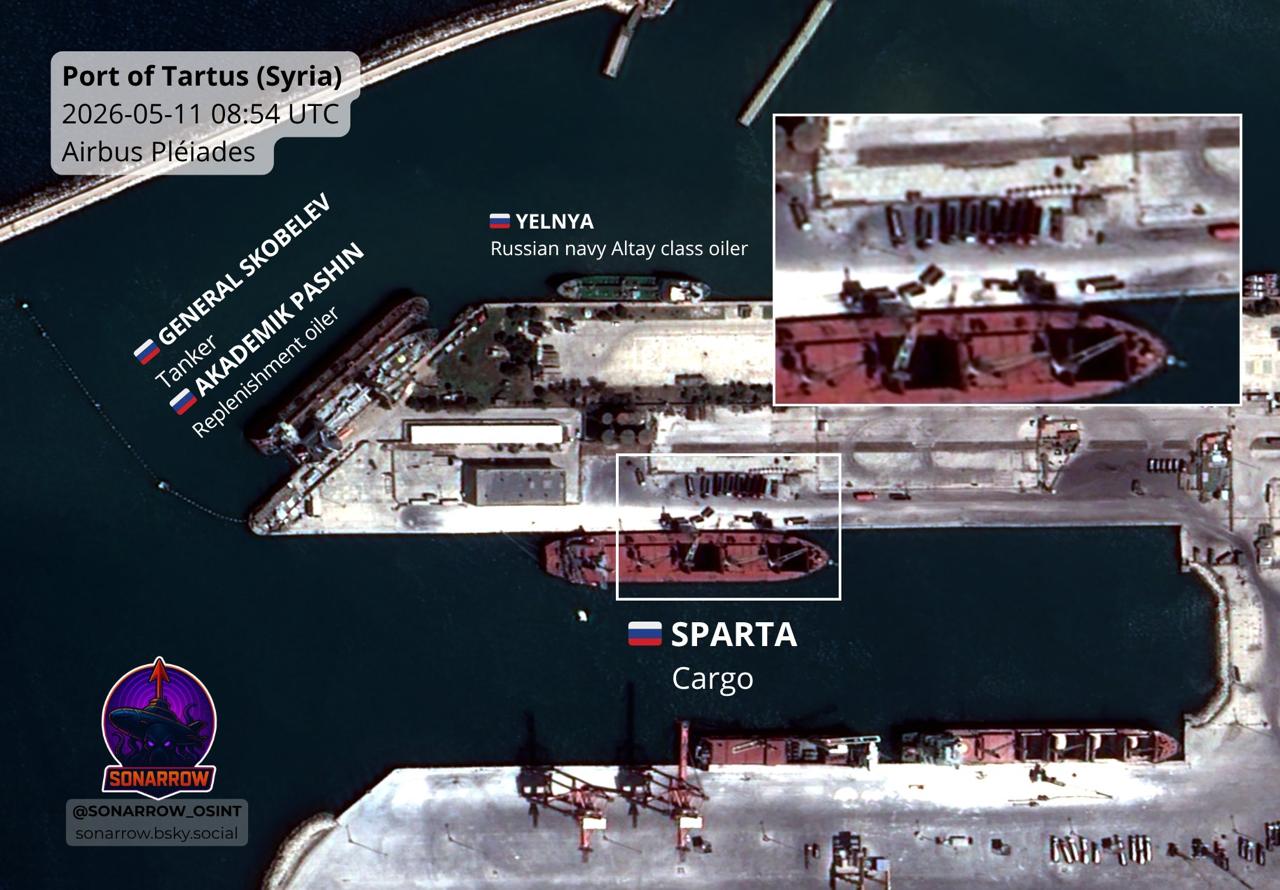
Photo: Satellite images of the port of Tartus in Syria (t.me/agentstvonews)
Why Russia needs Syria
Researchers believe the shipments are linked to negotiations over the future of Russian bases in Syria. The country’s new leadership appears willing to allow Moscow to retain limited access to Tartus and Khmeimim — but not for free.
Syria’s defense minister has stated that Russia may stay if it benefits Syria. According to Kommersant, Damascus wants to turn Khmeimim into a training centre for its military.
In 2026, Russia became Syria's main oil supplier. Losing the bases would be a serious strategic defeat for the Kremlin — Khmeimim and Tartus are key to expanding Russian presence in the Middle East and Africa.
After the mutual shelling between the US and Iranian navies, global oil prices continued to rise, as the market does not trust the fragile ceasefire. According to Reuters, the UAE is secretly transporting oil through the Strait of Hormuz — ships are turning off tracking systems and risking an Iranian attack.
Iran, meanwhile, has announced safe passage through the strait, citing new procedures whose details it did not disclose.