Russia rejects seven points from the original US peace plan for Ukraine, according to ISW

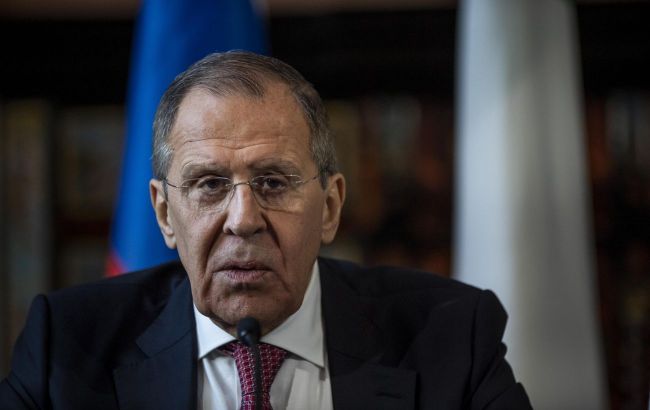 Photo: Russian Foreign Minister Sergey Lavrov (Getty Images)
Russian Foreign Minister Sergey Lavrov has rejected seven points of the initial peace plan proposed by the US, including a territorial exchange based on the line of contact and the provision of reliable security guarantees for Ukraine, according to the Institute for the Study of War (ISW).
Lavrov rejected provisions relating to freezing the current line of contact in the Zaporizhzhia and Kherson regions, restarting the Zaporizhzhia Nuclear Power Plant under the control of the IAEA rather than Russia, providing reliable security guarantees to Kyiv, and confirming Ukraine's sovereignty.
The Russian minister also spoke out against the demand that NATO simply stop further expansion, rather than insisting on the Alliance's return to its pre-1997 borders.
He rejected the deployment of European fighter jets in Poland. He refused to accept EU standards on the protection of religious minorities as a necessary basis for Ukrainian laws on this issue.
The ISW noted that Lavrov proposed ultimatums to the United States and NATO in December 2021 as the basis for security guarantees for Russia, which, in particular, demanded security guarantees from the US and NATO that would be tantamount to destroying the current Alliance.
NATO is required to stop deploying forces or weapons systems in member states that joined the Alliance after 1997.
Analysts noted Lavrov's reference to the Russian constitution, which states that the illegally annexed Crimea, Donetsk, Luhansk, Zaporizhzhia, and Kherson regions are “integral and equal subjects of the Russian Federation,” emphasizing that “Russia cannot give away territories enshrined in its constitution.”
“Lavrov’s December 11 statements indicate that the Kremlin is unwilling to accept the original 28-point peace plan but that Russia will instead demand further modifications should Ukraine agree to it,” the report said.
The ISW emphasized that senior Kremlin officials, including Russian president Vladimir Putin, have similarly rejected key points of the 28-point plan in recent weeks.
The Kremlin has also made it clear that it will not accept elections in Ukraine 100 days after the signing of the agreement, as provided for in point 25 of the initial peace plan.
Analysts have noted that members of the Russian State Duma, whom the Kremlin uses to shape Russian public opinion, have also made it clear that Russia remains uninterested in signing any peace agreements, including the original 28-point peace plan.
Peace plan
The initial US peace plan (actually drafted by the Russians) consisted of 28 points and was completely unacceptable to Ukraine and its European allies.
After discussions between the Ukrainian and American delegations, a number of changes were made to the framework document to make it acceptable to Kyiv. The plan was reduced to 20 points.
However, the issue of territories remains the most difficult in the plan. Ukrainian President Volodymyr Zelenskyy emphasized that Ukraine does not consider the possibility of transferring any of its territories, as this is not permitted by either national legislation or international law.
Recently, Ukraine sent the US a response to the peace plan, which includes new ideas for resolving contentious issues.
The document was edited by Kyiv together with its European partners, but the plan itself is not yet final.
According to Zelenskyy, this plan is not a single document, but a set of documents. Many of the documents have not yet been finalized because they depend on the form in which the basic 20-point plan will be adopted.