Russia plans war tours in occupied Donbas, The Times reports

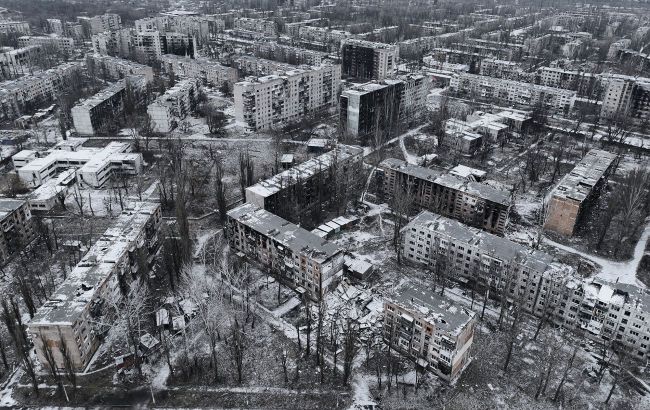 Photo: Russia prepares war tours in occupied Donbas (Getty Images)
The occupation administration in the Donetsk region is working on a so-called "war tourism" project despite ongoing fighting. Under the Kremlin's plan, cities destroyed by the war are to be turned into tourist routes and sources of revenue, The Times reports.
The initiative aims to attract tourists to "key points of military glory" and stimulate the local economy, said Kirill Makarov, the deputy prime minister of the so-called Donetsk People's Republic
At the same time, he did not explain how the occupation authorities plan to ensure visitors' safety in a region where hostilities have not ceased. The Donetsk region has been the site of some of the bloodiest fighting of the war, including the battle for Bakhmut, where tens of thousands of Russian troops are believed to have been killed.
Mariupol is also listed among the key locations. The city was almost destroyed by Russian bombardments in 2022.
The "war tourism" project is part of a nationwide Tourism and Hospitality program, which is scheduled to launch in 2026.
According to Makarov, around one billion rubles are planned to be invested in restoring hotels and infrastructure in the Donetsk region, although the sources of funding were not disclosed.
The Times reports that in many areas, water is supplied irregularly or is not available at all, forcing residents to dig wells or collect rainwater. During the summer, a video circulated online showing children from the occupied territories appealing to Vladimir Putin for help with the water supply.
One local told journalists that she can only take a shower outside the occupied territory, in Rostov-on-Don, about 160 kilometers from her home. "I just stand under the water, feeling human," she added.
Despite this, Vladimir Putin has publicly described the Donetsk and Luhansk regions as "fertile ground for tourism development" and has urged businesses to invest in the area.
Kremlin-installed Mariupol mayor Oleg Morgun said the city could attract up to one million tourists by 2030, while acknowledging serious infrastructure problems.
Occupation of Donbas
Russia occupied parts of the Donetsk region back in 2014, long before its full-scale invasion of Ukraine.
Since 2022, the region has become the scene of widespread destruction and a humanitarian catastrophe, particularly in Mariupol, where at least 20,000 people were killed, according to Ukrainian President Volodymyr Zelenskyy.
The occupation authorities have already rebuilt the Mariupol Drama Theater, which was destroyed in a Russian airstrike despite the large word "Children" written in front of the building. The first performances there are planned for the New Year holidays.
The Mariupol City Council, which has been operating from Dnipro since the occupation, said the Russians are trying to turn the city's tragedy, mass graves, and ruins into tools of propaganda and a source of revenue.
Western media have previously reported that Russia is using a network of paid bloggers and influencers to create the illusion of normal life in occupied Mariupol.
According to journalists, special “blogger schools” operate in the occupied territories under the patronage of occupation administrations.
The idea of "war tourism" is not only an economic project but also part of a broader Kremlin information campaign aimed at legitimizing the occupation and erasing the memory of war crimes.
Russian state media have been widely promoting reports about rebuilt residential buildings and renovated parks and sports grounds in the occupied territories. Particular emphasis is placed on the Mariupol Drama Theater, which was destroyed by Russian airstrikes in March 2022.
Residents in the occupied Luhansk region are suffering from severe shortages of water and heating.
Against this backdrop, Moscow has announced the launch of a large-scale program aimed at the so-called return of residents to occupied Ukrainian territories. In reality, the Kremlin’s goal is to formalize control over Donbas.
At the same time, Russian teachers continue to be brought en masse to the temporarily occupied territories. Under higher-paid contracts, they are replacing local educators who have refused to work under occupation authorities.