'Dancing on bones': Russia reopens Mariupol drama theater where civilians were killed

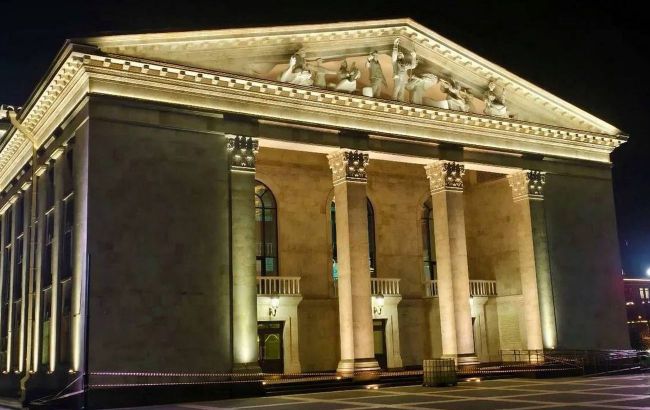 Photo: Russia opens a drama theater in Mariupol where people died (Russian media)
In Mariupol, the drama theater that was destroyed in a Russian airstrike in 2022 is set to reopen by the end of the month. Actors have described the move as "dancing on bones," The Guardian reports.
Symbol of a Russian war crime
As the outlet notes, the theater building became a symbol of one of the most horrific crimes of Russia's war against Ukraine. At the time of the strike, hundreds of civilians were sheltering in the basement, while the word "CHILDREN" was written in large letters outside the building.
According to confirmed data, at least dozens of people were killed, though the real number of victims may be significantly higher. The Guardian reports that Russian occupation authorities are presenting the reconstruction of the theater as a symbol of Mariupol's "renewal."
Reopening of the theater
The Kremlin has made the reconstruction of the city one of the hallmarks of its rule in occupied territories. At the same time, this process has been accompanied by arrests of critics, property seizures, and the displacement of thousands of Ukrainians from their homes.
After nearly two years of reconstruction, the theater is expected to reopen with a performance of The Scarlet Flower, a Russian fairy tale.
In a statement, the theater said it is "being reborn together with Mariupol," claiming that Russian and Soviet classics are returning to the stage.
What actors say
Former actors of the theater have sharply criticized the plans. Mariupol photographer Evgeny Sosnovsky, who moved to Kyiv after the occupation of the city, called the reopening an act of cynicism.
He said the site should be a memorial to the people of Mariupol who were killed, not a venue for entertainment.
Russia officially denies responsibility for the strike, claiming the explosion occurred inside the building. However, a number of independent investigations, including one by Amnesty International, concluded that the destruction was caused by a deliberate Russian airstrike that should be investigated as a war crime.
Former actress Vira Lebedynska, who now lives in Uzhhorod, said she cannot imagine songs being sung or performances staged at the site.
"Having entertainment, songs, and dances on top of all the bones? I have the feeling that the souls of the people who died there won’t let them perform well there," she said.
Lebedynska is currently taking part, along with other Mariupol actors, in the play Mariupol Drama, which is based on the events at the theater during the siege of the city and is touring across Europe.
"At the beginning, it was really difficult to perform in this, and I wondered why I have to remember all of this, but I carried on, and I realized it was my mission to tell the world about what happened there in the theatre," she said.
Meanwhile, some actors remained in occupied Mariupol and are cooperating with the new theater. According to Sosnovsky, their main priority is the opportunity to perform on stage, regardless of where it is located.
The former director of the theater remained in the city but was demoted and now leads the orchestra. Russian authorities appointed Igor Solonin, a former deputy director of the Donetsk circus, as the new head of the theater.
Strike on Mariupol drama theater
One of the most brutal crimes committed by Russian forces against civilians was the airstrike on the Mariupol Drama Theater.
On March 16, 2022, Russian aircraft dropped bombs on the building, where hundreds of people were sheltering in the basement, including families with children.
The central part of the theater was completely destroyed, and the rubble blocked access to the shelter.
According to journalistic investigations, around 600 people were killed in the theater. This estimate was determined using a 3D model of the building and numerous eyewitness accounts describing exactly where people were at the time of the attack.
In May 2022, it was reported that occupation authorities conducted a so-called cleansing of the building and removed the bodies of the victims.
By November, Russia claimed to have completed a reconstruction of the theater and announced its reopening.