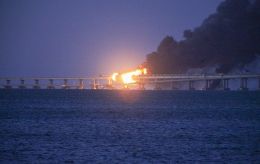
Russia moves to criminalize posts about Ukraine's strikes, with fines of up to 500,000 rubles

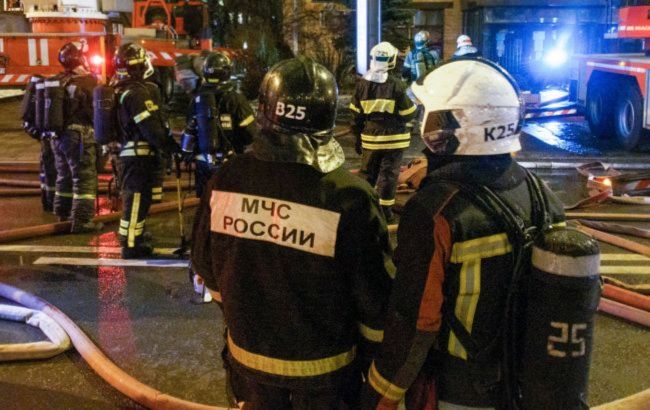 Kremlin proposes new penalties for reporting Ukraine's strikes on Russia (photo: Getty Images)
Russian authorities want to restrict the spread of information about Ukrainian strikes on Russia and occupied territories. To this end, three bills have been registered in the State Duma proposing administrative and criminal penalties for publishing unauthorized information, according to the Institute for the Study of War (ISW).
The bills were registered on November 26. If adopted, Russian media outlets and social media users will no longer be able to independently publish information about the consequences of Ukrainian attacks. In effect, the Kremlin would gain the power to determine which reports about the strikes can be circulated.
The first bill proposes amendments to Russian legislation on mass media and information. These amendments would allow authorities to control coverage of Ukrainian strikes in Russian media and restrict the spread of unofficial information about their consequences.
In particular, this includes information about Ukrainian drone, missile, and artillery strikes on Russian military equipment, industrial facilities, and storage sites. The restrictions would also apply to reports about the consequences of so-called "terrorist" attacks, acts of sabotage, and assassination attempts targeting government officials and law enforcement officers.
The second bill introduces administrative penalties. Russian citizens who spread information about the consequences of Ukrainian strikes could face fines of up to 500,000 rubles, or approximately $6,088.
Foreign nationals found guilty of disseminating unauthorized information could face not only fines but also deportation from Russia.
The third bill concerns amendments to the Russian Criminal Code. For repeated violations, Russian authorities could impose fines of up to 300,000 rubles (approximately $3,652) or sentence offenders to up to three years in prison.
If disseminating unauthorized information causes additional damage, the punishment could be up to five years in prison. Under the bill, a prior fine would not be a mandatory prerequisite for such a sentence.
Bills have already been criticized in Russia
Russian military bloggers have already pointed to the vague wording of the bills. In their view, the lack of a clear definition of unauthorized information sharing would allow the authorities to prosecute a very broad range of people.
One military blogger suggested that the penalties could apply not only to those who publish videos from strike sites but also to people who simply discuss such incidents in private conversations.
In his view, as currently drafted, the initiative could effectively prohibit Russians from even mentioning Ukrainian strikes without risking a violation of the law.
ISW believes this reaction may indicate growing Kremlin concern over discussions in Russia's information space about the authorities' inability to protect the country's territory from Ukrainian attacks. The Russian leadership is likely trying to force citizens into self-censorship.
Ukraine's latest strikes on Russia
As reported, Ukrainian drones have stepped up attacks on Russia's oil infrastructure in recent days. On November 25, Ukraine's Security Service (SBU), together with other Defense Forces units, struck two oil refineries in the Samara region at once: the Kuibyshev and Syzran refineries.
In addition, on November 26, industrial infrastructure in Russia's Stavropol Krai came under attack. Reports indicated that the Nevinnomysskaya power plant (GRES) had been hit. The facility supplies electricity to the Nevinnomyssk Azot chemical plant.
On the night of November 27, drones attacked the city of Yefremov in Russia's Tula region. The strike damaged a local combined heat and power plant that supplies energy to a synthetic rubber factory.
Attacks continued on the night of November 28: drones struck the Novoshakhtinsk oil refinery in the Rostov region for the second time in a week, sparking a fire.