Russia interferes in Hungary's elections to help Orbán win

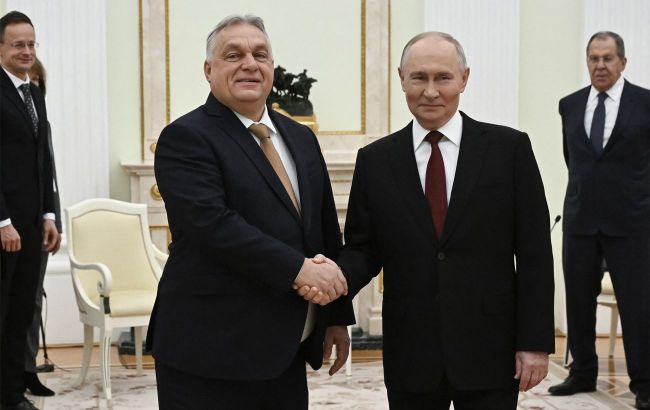 Photo: Vladimir Putin and Viktor Orbán (Getty Images)
Russian President Vladimir Putin instructed political strategists and military intelligence to interfere in the Hungarian elections to ensure the victory of incumbent Prime Minister Viktor Orbán and his party, according to VSquare.
Investigative journalists report that Putin personally appointed Sergei Kirienko, first deputy head of the Russian presidential administration, to be in charge of the operation.
Kirienko is considered one of the main architects of Russia's system of political influence both within the country and abroad. Previously, he coordinated large-scale interference in the 2024 presidential elections in Moldova.
According to investigators, Russia used vote-buying schemes, social media troll networks, and local activists to discredit pro-Western President Maia Sandu.
Project's sources say that the scenario of the operation in Hungary repeats the Moldovan model. Russian specialists in social media manipulation work directly at the Russian Embassy in Budapest under diplomatic cover. They have service and diplomatic passports, which grant them immunity.
According to the investigation, the team consists of three people and operates under the control of the Main Directorate of the General Staff of the Russian Armed Forces.
Kirienko maintains direct contact with the organizers of the Fidesz party's election campaign.
Sources in the special services of at least three European countries that are members of the EU and NATO have confirmed this to journalists following the situation.
According to one of VSquare's interlocutors, Orbán's anti-Ukrainian narratives create the perfect environment for Russian disinformation operations, as the country's information ecosystem is already primed for them.
Hungary elections
Western media reports that Hungarian Prime Minister Viktor Orbán may lose power ahead of parliamentary elections.
According to opinion polls, he is trailing behind his former ally and now main political rival Péter Magyar.
As Reuters notes, the opposition party Tisza has significantly overtaken Orbán's ruling Fidesz party for the first time. The gap between the political forces has grown to 12 percentage points, threatening Orbán's 16-year reign.
The rise in popularity of the opposition is linked to voter dissatisfaction with record inflation, economic problems, and a series of political scandals in the country.
Orbán's statements on Ukraine
With the elections approaching, Orbán is increasingly making harsh statements about Ukraine.
In particular, he threatened to use force to restore Russian oil supplies through the Druzhba pipeline and said that Budapest could suspend transit of supplies vital to Ukraine until Kyiv resumes operation of the pipeline.
For more details on why Orbán is stepping up his rhetoric against Ukraine, read the article by RBC-Ukraine.