Russia gets fresh revenue boost from rising oil prices, Reuters reports

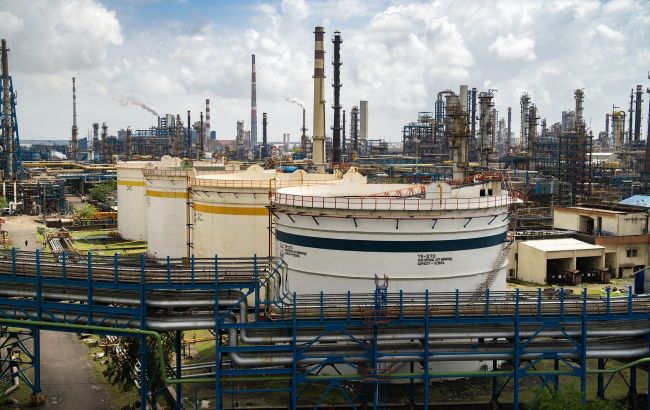 Illustrative photo: a petrochemical plant (Getty Images)
Russia's budget could get an unexpected breather in July as higher global oil prices are set to boost oil and gas revenues significantly. However, despite the sharp monthly increase, revenues for the first seven months of the year are still expected to remain below last year's level, Reuters reports.
According to Reuters calculations, Russia's oil and gas revenues could rise by about 60% in July compared with the same month last year.
One of the main reasons is higher global oil prices, as well as a significant increase in proceeds from Russia's oil extraction profit tax in the second quarter.
What Russia's budget relies on
Oil and gas revenues remain one of the key sources of funding for Russia's federal budget, accounting for roughly one-fifth of total state revenues.
Russia remains one of the world's largest oil producers and exporters alongside the United States and Saudi Arabia, and energy export revenues continue to play an important role in financing military spending.
Despite the increase, revenues remain below last year's level
Reuters notes that cumulative oil and gas revenues from January through July are likely to decline by around 11% compared with the same period in 2025, totaling about 4.9 trillion rubles.
Russia's Finance Ministry is expected to publish its official July revenue estimate on August 5.
Budget assumptions
Russia's 2026 federal budget projects oil and gas revenues of 8.92 trillion rubles, while total budget revenues are forecast at 40.283 trillion rubles.
For comparison, oil and gas revenues fell 24% last year to 8.48 trillion rubles, the lowest level since 2020.
According to Reuters, the recovery in oil prices has been the main driver behind the expected rise in revenues in July. However, on an annual basis, Russia's budget has yet to fully offset the previous decline.
As previously reported, rising tensions in the Middle East triggered a sharp increase in global oil prices. The price of a barrel of oil climbed above $100 for the first time in two months after Iran-backed Houthi militants in Yemen claimed missile and drone attacks on two Saudi tankers in the Red Sea, fueling concerns about potential disruptions to global oil supplies. Reuters reported that higher oil prices have been a key factor supporting Russia's expected revenue growth this month.