Russia eyes 12-hour shifts as Kremlin looks to make elites pay for war

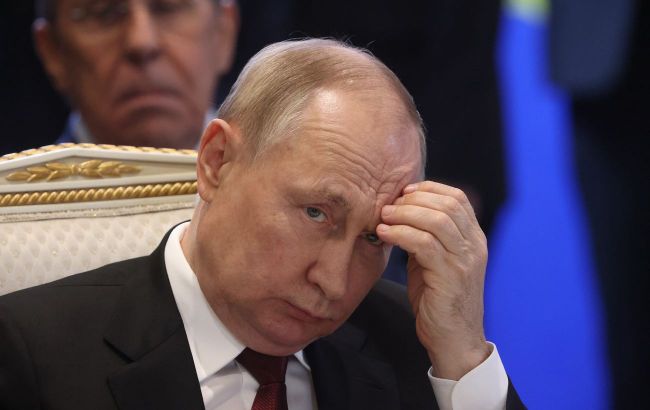 Russian leader Vladimir Putin and Russian military personnel (Photo: Getty Images)
It has become known that a meeting between Russian leader Vladimir Putin and billionaires could turn Russians into modern-day serfs, according to Ukraine's Foreign Intelligence Service.
After a heart-to-heart conversation with Putin, one of Russia's wealthiest men, Oleg Deripaska, announced an initiative that shocked even Russians accustomed to the unexpected.
Specifically, the oligarch proposed officially switching to a 12-hour workday with a six-day workweek. The justification is cynical: supposedly, this is the only way to save the economy from sanctions. At the same time, Deripaska called such a step a national characteristic - the ability to pull together and work harder in difficult times.
In reality, this is a gross violation of international ILO conventions, which Russia once committed to upholding.
Now the Russian worker is simply expendable material for maximizing profit.
Why big business suddenly started talking about forced labor
It's simple: the Kremlin has presented oligarchs with enormous bills to finance the war:
- Suleyman Kerimov must voluntarily give up 200 billion rubles;
- Vladimir Potanin – 130 billion;
- Oleg Deripaska – 100 billion.
To avoid losing their own capital and yachts, the oligarchs decided to shift these costs onto ordinary workers.
Indeed, a 12-hour shift will allow businesses to compensate for budgetary constraints by relying on excessively cheap and exhausting labor.
Academics and the military slave system
The initiative was instantly supported by a scientific landing force.
Thus, the academician of the Russian Academy of Sciences, Gennadiy Onishchenko, stated that such a schedule is normal, especially for the extractive industry.
This indicates a complete transformation of Russian consciousness toward a military slave-owning system, where human rights are revoked for the sake of the military machine.
And while workers are being offered to work themselves to death, officials continue to squander budgets.
By the end of 2025, the average bribe in Russia had risen to 1 million rubles, and the number of corruption cases jumped by 12%. Thus, the system is degrading: at the top — bribery and oligarchy, at the bottom — forced labor and patriotic calls to endure.
Repression is forever
For those hoping for a return to normalcy after the war, the Federation Council has already provided an answer. Senator Klishas stated that wartime restrictions and laws will continue to apply.
The authorities will only abandon them when they lose their relevance, which in the realities of a dictatorship means never.
Thus, Russia is finally turning into a digital Gulag, where oligarchs act as overseers and the people are rightsless serfs whose labor must pay for the Kremlin's imperial ambitions.
Intelligence previously reported that Russians are losing income and cannot service their loans. It is forecast that this trend will continue to grow by 7–10% each month in 2026.
Also, RBC-Ukraine reported that the oil giant Rosneft lost nearly 73% of its net profit by the end of 2025, which the company's head called a perfect storm.