Russia escalates hybrid attacks in Europe: Poland reveals Kremlin's main goal

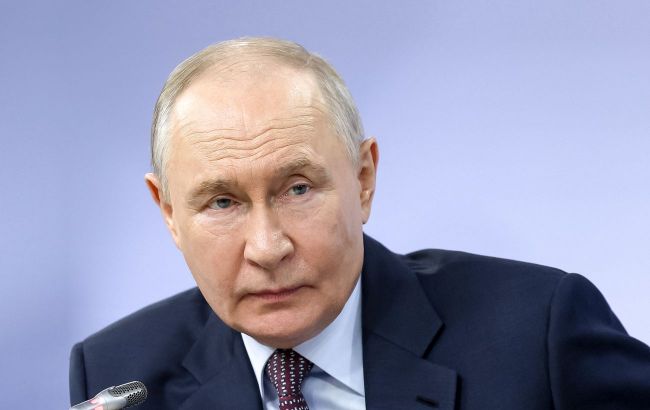 Photo: Vladimir Putin (Getty Images)
Russian intelligence agencies have stepped up their activities against European infrastructure that provides aid to Ukraine. Among the Russian targets are railways, bridges, and borders, according to the Ukrainian service of Polish Radio.
The Polish National Security Bureau believes that Moscow is attempting, in this way, to complicate support for Kyiv and weaken European countries' ability to help Ukraine.
According to Major General Adam Rzeczkowski, director of the Bureau's Department for Oversight of the Armed Forces, aggressive actions by Russian intelligence services have been documented since early September.
These actions target infrastructure facilities that are crucial for the delivery of aid to Ukraine. Among them, Rzeczkowski mentions railways, bridges, and border crossings.
"Blocking the ability to provide aid to Ukraine is the main objective of the Russian actions in Europe. Russia has failed to cut Ukraine off from financial support, so it has shifted to attempts to destroy infrastructure," the general states.
What Russian actions are forecasted in Poland
At the same time, the Polish National Security Bureau does not consider a direct military attack by Russia on NATO member states to be the most likely scenario in the short term.
Colonel Mariusz Soliwodzki, deputy director of the National Security Bureau's Analysis Department, explained that large-scale aggression against a NATO country would entail a high risk of direct conflict with the entire Alliance for Russia.
Instead, in his assessment, a scenario of gradually escalating actions below the so-called threshold of war remains more realistic.
"A more realistic scenario involves increasingly aggressive actions by Russia below the so-called threshold of war, including the use of purely military means," Soliwodzki says.
He also states that the National Security Bureau assesses the likelihood of additional mobilization in Russia following the State Duma elections as moderately high.
At the same time, the Polish side is not yet able to determine the scale of a possible mobilization or the extent to which it would affect the course of the war against Ukraine.
"However, an escalation of Russian military actions against Ukraine during the fall and winter appears likely," Soliwodzki notes.
Poland speaks of long-term threat
The National Security Bureau representative also states that Russia is maintaining a confrontational course and shows no willingness to genuinely end the war against Ukraine and return to compliance with international norms.
According to Soliwodzki, Moscow seeks to restore its influence and is systematically weakening potential adversaries in various spheres.
"It systematically and consistently seeks to weaken potential adversaries in all spheres of activity, while tailoring its tools to specific countries, including Poland," the colonel explains.
He emphasizes that the Russian threat to countries in the region will not disappear automatically even in the event of a ceasefire or the end of the war in Ukraine.
"Even a possible ceasefire, a freeze, or even the end of the war in Ukraine will not eliminate the long-term threat posed by Russia to the states of the region," Soliwodzki concludes.
Earlier, Western experts warned of an intensification of Russia's shadow war against NATO countries. In Germany, acts of sabotage have already been recorded against the energy sector, airports, defense enterprises, and government IT systems.
Russian intelligence agencies are recruiting operatives via Telegram to carry out arson attacks, sabotage on the railway, and gather information on military facilities.
Meanwhile, Ukrainian President Volodymyr Zelenskyy has called on European countries to jointly create an architecture of resilience to counter military, energy, and information threats.