Russia delays first launch of new Soyuz-5 rocket

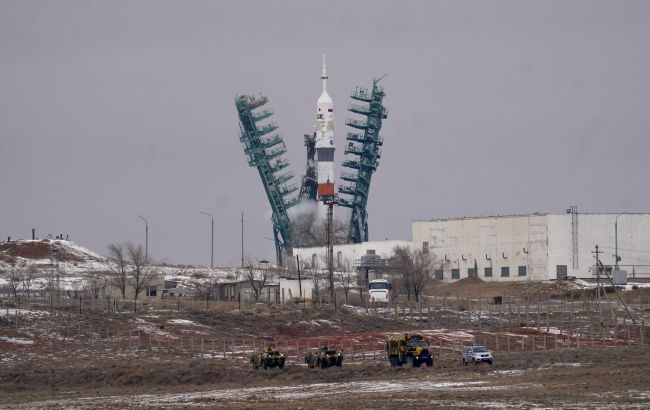 Russia delays first launch of new Soyuz-5 rocket (Illustrative photo: Getty Images)
Russia and Kazakhstan have postponed the first launch under the joint Baiterek space project, including the debut of the Russian Soyuz-5 rocket, Bloomberg reports.
According to Russia's space agency Roscosmos, the launch has been postponed for additional checks of onboard systems and ground equipment. The Baiterek program is in its final stage, and the extra tests are intended to ensure a safe and successful first launch.
The Soyuz-5 rocket was scheduled to launch by the end of the year from the new Baiterek complex at the Baikonur Cosmodrome in Kazakhstan, which for decades served as Russia's leading space launch site. The program is positioned as a competitor to Elon Musk's SpaceX.
Development of the Soyuz-5 has fallen behind schedule due to years of delays and sanctions imposed after the annexation of Crimea in 2014 and expanded following Russia's full-scale invasion of Ukraine in 2022.
Roscosmos said a new launch date will be determined after all tests are completed and coordination among program participants is finalized.
In addition, Russia's space program has faced other problems. In late November, a launch pad at Baikonur was damaged during a rocket launch to the International Space Station, temporarily halting crewed flights. Repairs to the launch pad are expected to be completed by the end of February.
Currently, Russia is using its own cosmodromes to launch spacecraft. On December 25, a Soyuz 2.1a launch vehicle was launched from Plesetsk, and another Soyuz launch is planned for December 28 from Vostochny.
A Proton-M launch vehicle scheduled for December 15 from Baikonur did not take place. This was another blow to the country's space industry, which is in a severe crisis.
In addition, during the launch of the Soyuz MS-28 spacecraft to the ISS on November 27, a service module fairing failed to deploy. This accident led to the suspension of all crewed launches, becoming the most significant disruption in Russia's space program since the beginning of orbital exploration.