Russia could earn $250 billion from Iran war, Spiegel reports

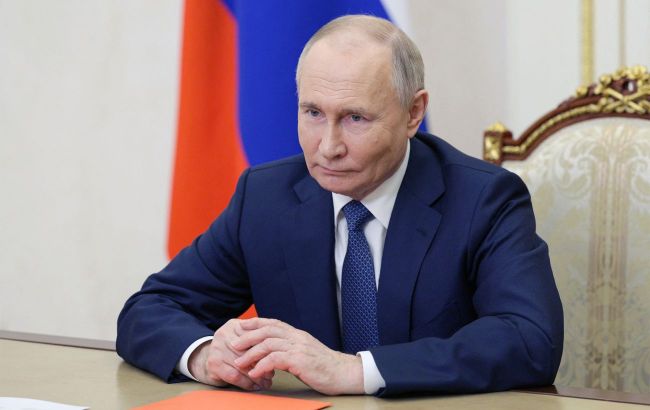 Photo: Russian President Vladimir Putin (Getty Images)
The war in Iran could bring up to $250 billion in additional revenue to Russia’s budget. These funds would allow the Kremlin to finance its aggression against Ukraine far more intensively than it does now, according to a study by economists at the KSE Institute of the Kyiv School of Economics, published by Spiegel.
Impact of the conflict on Russia’s budget
According to the report, analysts modeled three scenarios depending on the duration of the conflict.
Short war scenario (until mid-April): Even in a brief conflict, Russia would earn an additional $84 billion. Oil prices would rise to $100 per barrel, and Russia's state revenues would increase by $45 billion.
Prolonged conflict scenario (until the end of May): A temporary spike in oil prices to $140 would bring Russia an additional $161.3 billion. Total energy export revenues would increase by 135% compared to pre-war forecasts.
Major war scenario (until the end of September): This is the worst-case scenario, with oil prices potentially reaching $150–200 per barrel. Russia would receive a superprofit of $252.4 billion — more than it earned in 2022 — while tax revenues to its budget would nearly quadruple.
Experts stress the critical importance of regional stability for the security of all of Europe.
"From a European security policy perspective, passage through the Strait of Hormuz must be restored as soon as possible, regardless of the circumstances," said co-author of the study and Director of the KSE Geoeconomics Center, Benjamin Hilgenstock.
Impact on the war in Ukraine
Economists emphasize that rising revenues for Moscow directly threaten Ukraine, as these resources enable Russia to sustain its aggression.
The projected superprofits for the Kremlin ($250 billion) significantly exceed the scale of Western aid to Kyiv.
"Military actions between the United States and Israel in the Persian Gulf will have significant consequences for another conflict much closer to Europe: the war in Ukraine," Spiegel notes.
Russia’s energy revenues and the West’s position
It was previously reported that Russian President Vladimir Putin instructed energy companies to maximize profits from the price surge caused by the war in Iran.
Amid the global crisis and supply shortages, the US Treasury Department allowed India to purchase Russian oil stranded at sea by issuing a special 30-day sanctions waiver.
In addition, the US Office of Foreign Assets Control (OFAC) issued a new license temporarily allowing transactions involving Russian oil carried by sanctioned tankers. The decision applies to cargo loaded before March 12 and permits its unloading and sale to stabilize the energy market.