Reparations loan for Ukraine: Merz assesses chances of reaching agreement

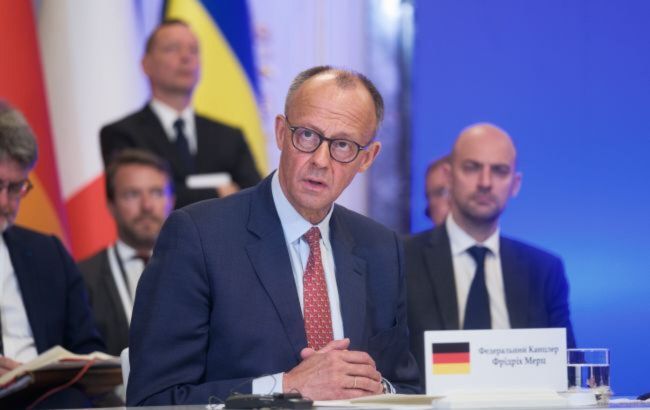 Photo: German Chancellor Friedrich Merz (Vitalii Nosach, RBC-Ukraine)
German Chancellor Friedrich Merz believes that the probability of reaching an agreement in Europe on providing Ukraine with a reparations loan from frozen Russian assets currently stands at "50/50".
He commented while speaking about discussions within the EU on further support for Ukraine, according to Reuters.
According to Merz, adopting such a decision is necessary, as Ukraine will require funding for at least another two years after the current package of European assistance expires in the first quarter of 2026.
"There are reservations throughout Europe, and I can well understand these reservations," he said. "But ... if we don't act now and make the decision we could make to halt this advance of the Russian army, when will we?" the German chancellor stressed.
He also noted that he was not surprised by the tough tone toward Europe in the new US National Security Strategy, as it reflects criticism voiced by US Vice President J D Vance at the Munich Security Conference earlier this year.
At the same time, Merz expressed confidence that isolationist sentiments in the United States will not be long-lasting and that Washington will eventually return to closer cooperation with European partners.
Reparations loan for Ukraine
There has been a delay within the EU over providing Ukraine with a €140 billion reparations loan based on frozen Russian assets. The loan is being blocked by Belgium, where the largest share of the aggressor’s assets is held at the Euroclear depository.
Brussels cites legal risks vis-à-vis Moscow as the reason for not approving a reparations loan for Ukraine. However, media reports have also pointed to more pragmatic reasons for Belgium’s position, namely that the country may be generating income from operations involving frozen Russian assets.
In recent days, media outlets reported that Belgium is demanding "autonomous guarantees" from the European Union in exchange for supporting a reparations loan for Ukraine funded by frozen Russian assets. Until such guarantees are provided, Belgium will continue to block the decision.
At the same time, the EU has a contingency plan in case an agreement on a reparations loan for Ukraine cannot be reached. In particular, the bloc is considering a transitional loan financed through EU borrowing to support Ukraine in early 2026.