Putin’s new Ukraine plan called 'fiendishly cynical' by UK media

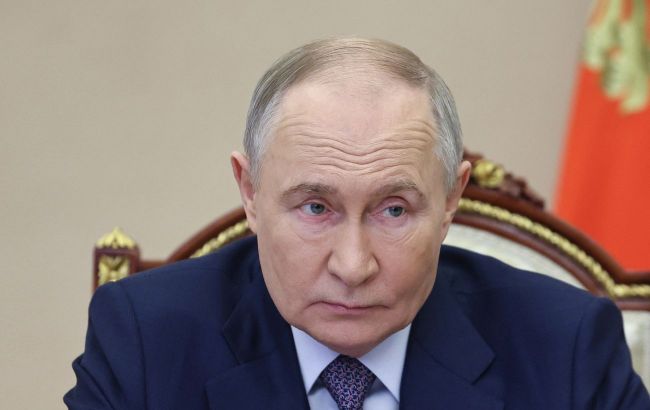 Russian President Vladimir Putin (photo: Getty Images)
Russia’s large-scale attacks on Ukraine’s energy infrastructure during extreme cold are intended to generate a new wave of Ukrainian refugees and put additional pressure on EU countries, reports The Spectator.
Owen Matthews, deputy editor of The Spectator, wrote in a winter 2026 article that the Russian military has intensified attacks on Ukraine’s energy system during a period of sharp cold, attempting to make cities uninhabitable.
After several unsuccessful winter campaigns, the Kremlin, the article suggests, has reached a point where a strategy of using the cold as a weapon could produce results.
At temperatures as low as -16°C, strikes are hitting heating systems, power grids, and critical life-support infrastructure.
Scale of the attacks and consequences
“Over the past week, Russia hit Ukraine with an unheard-of bombardment of nearly 1,100 drones, 890 guided bombs and more than 50 missiles, including the Oreshnik hypersonic missile, targeting power plants and homes during brutal cold,” the author noted.
Ukrainian President Volodymyr Zelenskyy described these attacks as cynical terror, emphasizing that over a thousand buildings remain without heating.
Since late December, cities including Odesa, Sumy, Dnipro, Kharkiv, Zhytomyr, Zaporizhzhia, as well as parts of Kyiv and its suburbs, have been temporarily left without electricity and heating.
Risk of a new refugee wave
The article points out that destruction of heating networks in winter has long-term effects: frozen water bursts pipes, making repairs impossible until spring.
In such conditions, many Ukrainians face a difficult choice: stay without basic necessities or leave the country. According to the State Border Guard Service, passenger traffic across the border increased by about 27% at the start of the year.
Pressure on Europe
The article notes that several EU countries are already preparing for a possible new influx of refugees. Germany, Poland, Czechia, and the Netherlands are adjusting their approaches to supporting Ukrainians amid growing fatigue and budget constraints. The author believes the Kremlin’s goal is to create political pressure on European capitals through a humanitarian crisis.
“Putin’s strategy of de-housing Ukraine’s population is fiendishly cynical. But it is a strategy that could prove devastatingly effective in focusing European minds on the human cost of this war – and on how to end it as soon as possible,” he concludes.
Russian leader Vladimir Putin, according to Western analysts, has increasingly resorted to using look-alikes during public appearances amid the full-scale war against Ukraine, viewing the practice as an element of personal security and a way to minimize the risk of assassination attempts.
Russia has publicly acknowledged its technological lag in the segment of heavy drones, against the backdrop of Ukraine’s active and effective use of such systems. As a result, Russian military officials have stated the need to accelerate the development of new drone platforms, which are planned to be used both for logistical tasks and potentially for strike missions.