Putin's approval rating falls for second straight week, poll shows

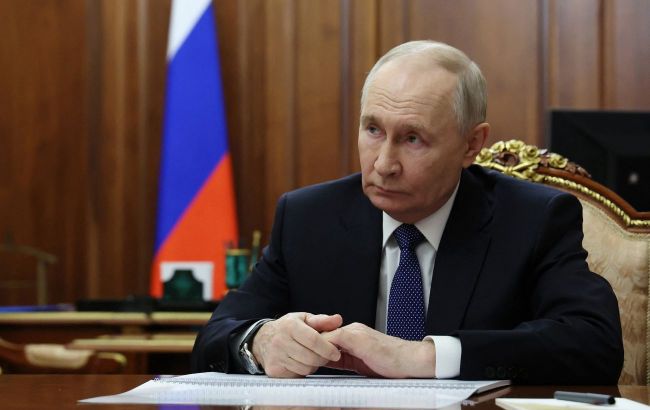 Russian President Vladimir Putin (photo: Getty Images)
Public trust in and approval of Russian leader Vladimir Putin have declined for the second consecutive week, according to a poll by the state-run Russian Public Opinion Research Center (VTsIOM). The decline is attributed to Ukraine's long-range strikes.
What the poll showed
According to the poll conducted between June 29 and July 5, 66% of respondents approved of Putin's performance. This is 0.9 percentage points lower than the previous week.
Trust in Putin was expressed by 72.3% of respondents, down 1 percentage point from the previous week.
Both indicators have been declining for two consecutive weeks: approval has fallen by 4.4 percentage points (from 70.4%), and trust has also dropped by 4.4 percentage points (from 76.7%).
The disapproval rating increased by 1.2 percentage points over the week to 22.5%. Distrust in Putin rose by 0.7 percentage points to 22.8%.
At the same time, neither indicator has yet reached the wartime lows recorded in mid-April during internet shutdowns (65.6% approval and 71% trust).
A decline in trust was also recorded by the Kremlin-aligned Public Opinion Foundation (FOM). According to its poll conducted on July 3-5, trust in Putin fell from 71% to 69%. At the same time, FOM recorded an increase in approval of the president's performance from 70% to 71%.
Why are the ratings falling
According to FOM, the main event of the week for Russians was the gasoline shortage and rising fuel prices, cited by 20% of respondents.
For comparison, 18% of respondents named the special military operation in general as the main topic of the week, while 12% pointed to the attack on Russian territory.
Just a week earlier, the main events for Russians were attacks on Russia (19%) and the special military operation in general (15%), while only 14% mentioned the gasoline shortage.
What preceded the fuel crisis
Meanwhile, attacks on Russia's oil infrastructure continue. As a result of Ukrainian drone strikes, Russia may have lost between 20% and 40% of its oil refining capacity, while the fuel crisis has affected around 50 million citizens of the aggressor state.
Nearly 50 regions introduced restrictions on gasoline sales before the end of June.
Advisers proposed a ceasefire along the front line to the Kremlin leader, but he rejected the idea.
According to Reuters sources close to the Kremlin, Putin considers establishing control over the entire Donbas his main objective and is likely to escalate the war further in the coming months.