Philippines accuses China of illegal activity in its waters and warns of response

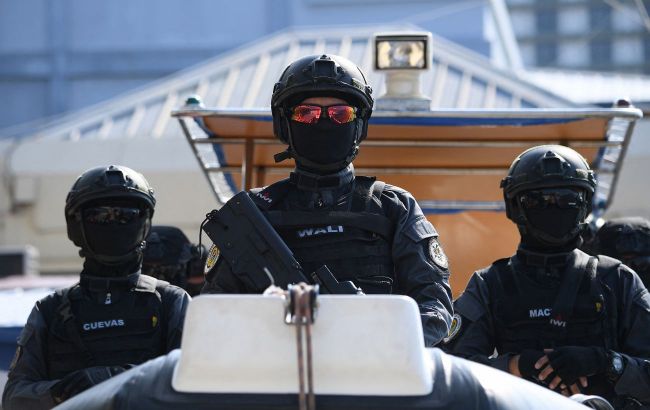 Photo: Philippine Coast Guard personnel (Getty Images)
The Philippine Coast Guard said that four Chinese vessels are conducting illegal marine scientific research in the country’s waters and warned that they could be forced out, according to Bloomberg.
According to agency officials, the research is being carried out without authorization from the Philippine government, which they described as a violation of the United Nations Convention on the Law of the Sea.
"The PCG (Philippine Coast Guard) has determined that they are conducting illegal marine scientific research without the legal authority or prior consent of the Philippine government, in clear violation of the United Nations Convention on the Law of the Sea," said Coast Guard spokesperson Rear Admiral Jay Tarriela.
He added that aircraft and patrol boats could be deployed to push the Chinese vessels out of the area.
What is known about the vessels
According to Philippine authorities, two vessels were spotted west and northeast of Itbayat, Batanes. Another was near Jackson Atoll, Palawan, while a fourth was northwest of Scarborough Shoal.
One of the vessels, according to the Coast Guard, is an advanced oceanographic research ship capable of conducting deep-sea studies, seabed mapping, and geophysical surveys.
Another is described as the world’s first intelligent drone carrier, built to simultaneously deploy and manage more than 50 aerial, surface, and underwater drones for comprehensive three-dimensional ocean research.
"We will not tolerate any illegal marine scientific research conducted without our government's consent," said Philippine Coast Guard chief Ronnie Gil Gavan.
As a reminder, on April 20, the United States and the Philippines launched the largest-ever joint "Balikatan military exercises" drills, highlighting Washington's growing military presence in the Indo-Pacific region amid tensions with China.
More than 17,000 troops are taking part in the exercises, along with allies including Japan, Australia, Canada, New Zealand, and France. The drills began amid increased Chinese activity in the region after Beijing deployed warships for its own exercises in the western Pacific.