Pentagon chief Hegseth pushes revenge-focused strategy in Iran war

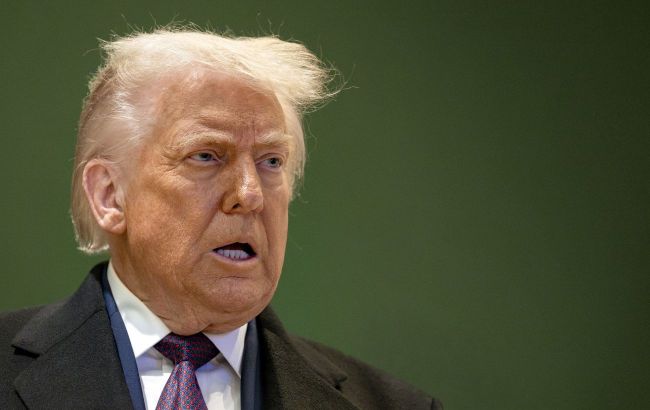 United States President Donald Trump (photo: Getty Images)
Trump explains the war in Iran as a nuclear threat. But Defense Secretary Hegseth speaks not about security but about revenge, and understanding this rhetoric is important, The New York Times reports, citing journalist Greg Jaffe.
How Hegseth's experience in Iraq influenced his worldview
Back in 2005, young Hegseth volunteered to serve in Iraq after he read about a terrorist attack in which 18 children were killed. At that time, he spoke about fighting evil and moral duty.
After returning, he actively supported the strategy of General Petraeus — protection of civilians, rebuilding cities, and interaction with local leaders. But later, something changed.
Pouring 'death and destruction from the sky all day long'
According to a journalist, today Hegseth describes the mission in Iran very differently. "Their war on Americans has become our retribution," he said. He formulates the goal of the operation as the need to pour "death and destruction from the sky all day long."
The name for the operation was also personally approved by Hegseth — Epic Fury. Earlier, the Pentagon chose names such as Enduring Freedom. This is not just a name — according to the New York Times, it deliberately reflects the rhetoric of revenge.
Why does he think so
According to The New York Times, Hegseth is convinced that high ideals led the United States to defeats in Iraq and Afghanistan. In his view, the strength of an army lies not in a moral goal, but in the ability to destroy the enemy. Everything else he considers a distraction and weakness.
"This is not 2003. This is not endless nation-building," he said at the Pentagon.
Critics of such an approach warn that without a moral purpose, soldiers may remain alone with a psychological burden after war.
Hegseth's views reflect Trump's views
According to The New York Times, the position of defense secretary coincides with the views of President Trump, who consistently rejects the idea of a special role of the United States in spreading democracy in the world.
At the same time, Donald Trump often speaks about democracy mainly in the domestic political context of the United States.
In his speeches, the President of the United States reacted sharply to accusations from political opponents that his policy allegedly poses a threat to democracy.
During election debates, he said that his opponents themselves are a threat to democratic institutions, rejecting such accusations against him.
Trump also called his policy a victory for democracy and freedom, while emphasizing that the United States should focus on ending wars rather than starting new military campaigns.