Pensions in occupied territories may not be paid: Russia is changing payment system

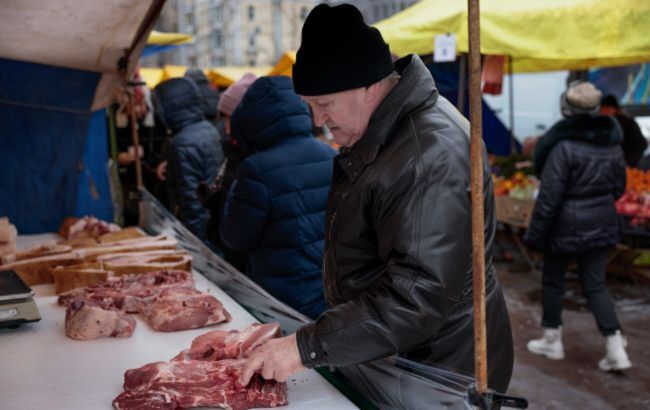 Photo: pensioner (Getty Images)
The new pension payment scheme proposed in Russia will directly affect residents of the temporarily occupied territories, where pension issues have already become systemic, according to the National Resistance Center.
The proposed changes are particularly concerning for the temporarily occupied territories, where the pension system has long been used as a tool of control.
Tax instead of pension
The Russian proposal suggests directing up to 3% of personal income tax not to the state budget but directly to support parents.
In practice, this represents a partial shift of pension obligations from the state to families, regardless of their financial capacity.
Implications for occupied territories
For residents of the temporarily occupied territories, this initiative is especially significant. Pension payments there have long been delayed, reduced, or used as a tool for control. The new scheme formalizes this approach, explicitly stating that care for the elderly is no longer the responsibility of the state.
Challenges of implementation
The problem is compounded by the fact that a large portion of the working-age population in the occupied territories is employed informally or earns minimal income. In such conditions, even symbolic financial support for parents becomes inaccessible, while the tax burden and administrative oversight remain fully in place.
As a result, the state retains tax collection and management of the system but effectively removes itself from responsibility for pensioners.
For the occupied territories, this means further deepening social instability and increased dependence of the elderly on families who themselves are in vulnerable positions.
The UN World Food Programme has focused its efforts on frontline areas, providing support through food packages or cash assistance depending on local conditions.
For comparison, in January the Ukrainian Pension Fund distributed over 65 billion hryvnias in pensions, with total social payments exceeding 82 billion hryvnias.