Panama Canal transit fees hit record high amid Iran war — FT

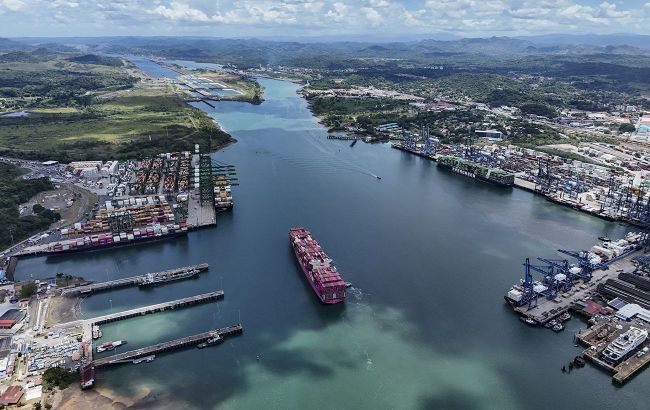 Photo: A ship passing through the Panama Canal (Getty Images)
The cost of transiting the Panama Canal has risen to a record high. This is due to a sharp increase in demand from Asian companies that are rerouting their shipments because of the war in Iran, according to the Financial Times.
According to the FT, daily auctions for waterway transit rights are seeing five times more bids than before the conflict began, and the average price for passing through Panamax-class locks is about $837,500.
As Ross Griffith, head of pricing at Argus, explains, about 70% of ships passing through the Panama Canal use Panamax locks. Therefore, auction prices have risen nearly tenfold since the start of the war with Iran and the closure of the Strait of Hormuz.
He adds that this is a very significant increase, reflecting how Asian buyers are trying to source oil, fuel, and dry bulk cargoes, such as coal, primarily from the US Gulf Coast.
The increase in shipments of US oil and fuel through the canal, which is the shortest route between the Gulf Coast and Asia, has led to tanker wait times of up to four days, the longest in six weeks.
This has forced some companies to pay significant sums to avoid queues at the canal entrance, with individual auctions for the largest locks reaching $4 million in April.
Major shipping operators that regularly use the Panama Canal, particularly container carriers and liquefied petroleum gas (LPG) transport companies, typically book slots in advance at fixed rates that are significantly lower than auction rates.
At the same time, up to 30% of the Canal’s traffic may be allocated through daily auctions rather than bookings.
Situation around Hormuz Strait
On April 13, the United States announced that it would impose a naval blockade on the Strait of Hormuz after Iran effectively closed the world’s busiest oil shipping channel in response to a joint US-Israeli strike against Iran in late February.
On April 17, Iranian Foreign Minister Abbas Araghchi announced the temporary reopening of the Strait for the duration of the ceasefire between Lebanon and Israel, adopted on April 16.
However, the situation escalated again the very next day: Tehran announced strict control over transit and accused the US of violations.
On April 21, the US President stated that the blockade would remain in effect until an agreement is reached.
According to him, due to the restrictions, Iran is losing about $500 million daily, which is putting serious pressure on the country’s economy.