Oreshnik enters serial production? How fast Russia making missiles and how many it has

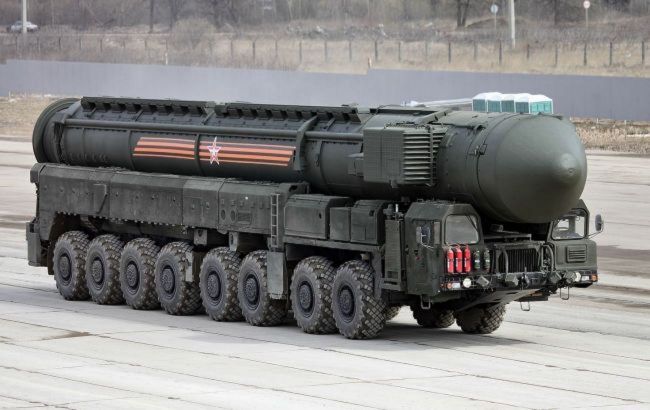 Illustrative photo: Oreshnik missile (Russian media)
The strike with an Oreshnik ballistic missile on Bila Tserkva during the night of May 24 may indicate an increase in the pace of its production. While 13.5 months passed between the first two strikes on Dnipro and Lviv, the interval between the second and third strikes shrank to 4.5 months.
According to the report, such dynamics correspond to previous data from Ukrainian intelligence agencies regarding the Kremlin’s plans. In particular, during a briefing in October 2025 attended by the president and intelligence chiefs, it was stated that Russia planned to manufacture up to six Oreshnik intermediate-range ballistic missiles (BRSDs) in 2026.
Later, on January 9, 2026, First Deputy Head of Ukraine’s Foreign Intelligence Service Oleh Luhovskyi told Ukrinform that Russia possessed no more than three to four such missiles. At the same time, he warned about plans to launch serial production at a rate of five or more units per year.
How many Oreshnik missiles Russia has accumulated
According to data from Ukraine’s Defense Intelligence (HUR) published by NV, as of April 2026, Russia had up to 10 Oreshnik BRSds in reserve. Experts note that the wording "up to" in this case most likely refers to the maximum possible number rather than an approximate estimate.
However, the shift in rhetoric and the broader range of estimates point to the beginning of small-scale production. If the missile was not yet being mass-produced during the second strike on Lviv, then the May 24 attack may have already taken place after the launch of serial production.
Analysts currently say that the production rate stands at around one missile every 2–2.5 months. If serial production began in February or March of this year, the occupiers would only have had time to manufacture one additional missile.
The estimate from the beginning of the year, therefore, remains relevant: as of the end of May, the aggressor country has only three to four Oreshnik missiles in its arsenal.
During the night of May 24, Russian forces carried out a massive combined attack on Ukraine using drones as well as air-, sea-, and ground-launched missiles. Kyiv was the main target of the enemy strike.
During the attack, the enemy used the RS-26 Rubezh intermediate-range ballistic missile, known as Oreshnik. The launch was carried out from the Kapustin Yar test site, and the impact was recorded near Bila Tserkva in the Kyiv region.