
NYT reveals why Russian air defense systems in Venezuela did not shoot down US helicopters

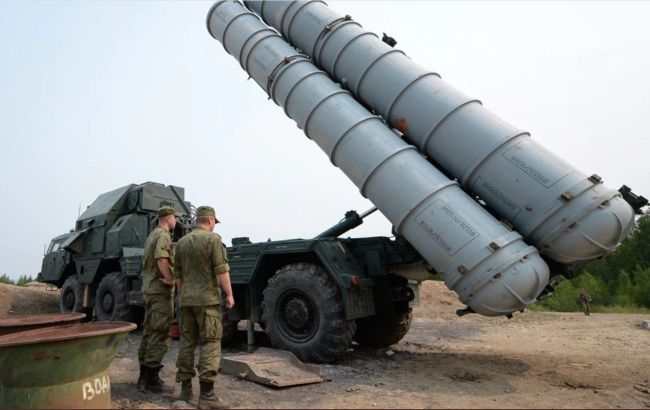 Illustrative photo: Russian air defense systems were not even connected to radars at the time of the US operation (Russian media)
Advanced Russian air defense systems in Venezuela were not connected to the radars, and therefore did not respond to US helicopters in the country’s airspace, The New York Times reports.
Venezuela decided to purchase Russian air defense systems in 2009 amid tensions with the US. The country’s then-president, Hugo Chávez, called them a "deterrent to American aggression."
US officials told the outlet that Venezuela was unable to maintain or operate the S-300 and Buk air defense systems. Moreover, at the time of the US operation, some components of these systems were in storage and not ready for use.
The NYT notes that the incompetence of the Venezuelan military played a major role in the successful extraction of Venezuela’s President Nicolás Maduro.
Air defense systems had been nonoperational for years
Former US officials and analysts noted that Venezuela’s much-publicized air defense systems were effectively not connected at the time of the US operation and may not have worked for years.
"After years of corruption, poor logistics and sanctions, all those things would have certainly degraded the readiness of Venezuela’s air defense systems," said Richard de la Torre, former C.I.A. station chief in Venezuela.
The aggressor country bears partial responsibility, as its instructors and technical staff should have ensured the air defense systems were operational.
"Russia’s own war demands in Ukraine may have limited its ability to sustain those systems in Venezuela, to make sure they were fully integrated," de la Torre added.
US operation in Venezuela
On January 3, the US carried out a large-scale special operation in Venezuela, striking the capital, Caracas. The operation aimed to detain Venezuela’s President Nicolás Maduro, whom US forces transported to the United States along with his wife, Cilia Flores.
US President Donald Trump officially confirmed the success of the operation, stating that Maduro will face trial on charges of narco-terrorism.
In addition to running drug trafficking schemes, Maduro is accused of illegal possession of automatic weapons and destructive devices, as well as conspiracy to use such weapons against the US.
Later, on January 5, Maduro and his wife, Cilia Flores, pleaded not guilty in a New York court. The hearing lasted about 30 minutes, with the next scheduled for March 17.
RBC-Ukraine previously reported that the trial of the ousted Venezuelan president Nicolás Maduro in the US will not begin before 2027. For now, the court is only setting the schedule for evidence exchange and conducting preparatory procedures.

