Nuclear waste becomes diamond battery that lasts 5,700 years

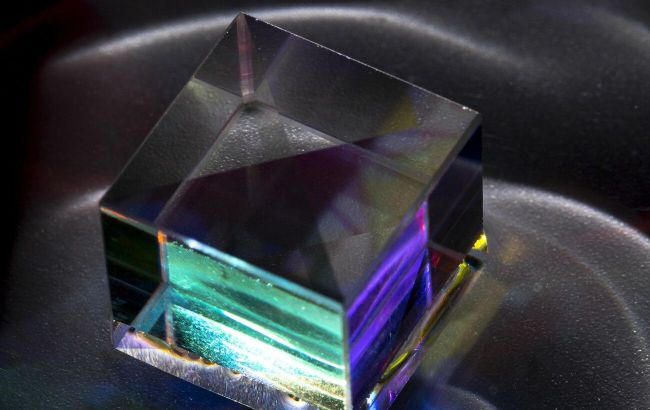 Scientists have created a battery that works for millennia without recharging (Photo: Magnific)
Researchers from the University of Bristol, in collaboration with the UK Atomic Energy Authority (UKAEA), have manufactured a prototype power source capable of operating for thousands of years without recharging or maintenance, reports Futura.
The device is a diamond nuclear battery that uses the radioactive isotope carbon-14. Instead of the traditional use of this isotope for archaeological dating, scientists have applied it to generate long-lasting microcurrent.
Operating principle and design features
The power cell functions through the slow radioactive decay of carbon-14, which has a half-life of approximately 5,700 years.
This means that even after six millennia, the device will retain half of its initial power.
How is this possible?
- Electron generation — during decay, carbon-14 emits fast beta particles (electrons).
- Diamond semiconductor — the isotope is sealed inside a synthetic diamond, which acts as a semiconductor, capturing the movement of electrons to generate a continuous electric current.
- Internal shielding — the diamond casing fully absorbs the beta radiation within the structure, making it impossible for hazardous radiation to escape during normal operation.
- Power level — the device generates microwatt-level energy, similar to the principle behind solar panels, but using the energy of atomic decay instead of light photons.
Turning nuclear waste into an energy source
The primary raw material for manufacturing such batteries is radioactive graphite, extracted during the decommissioning of nuclear reactors.
Extracting the carbon-14 isotope from the surfaces of graphite blocks solves two problems at once:
- Reducing the hazard level of nuclear waste for long-term storage,
- Converting the isotope into a useful energy resource.
After the battery reaches the end of its service life, the diamond module can be recycled or safely disposed of.
Applications of the technology
Since the battery is designed for micropower output, it will not replace lithium-ion batteries in smartphones or electric vehicles.
The main value of the innovation lies in ensuring the stable operation of equipment in environments where battery replacement is difficult, dangerous, or technically impossible.
- Medical implants — pacemakers, neurostimulators, and hearing aids will be able to function for decades without the need for additional surgeries.
- Spacecraft — deep-space probes and satellites will gain a reliable power source for instruments in areas where solar energy is unavailable.
- Remote monitoring — Arctic weather stations, deep-sea equipment, and infrastructure sensors will be able to operate continuously in autonomous mode.
The development is currently in the prototype stage. Scientists are working on commercial partnerships, scaling the technology, and navigating regulatory procedures for market entry.
More interesting: