Norway preparing for possible war with Russia, defense chief says

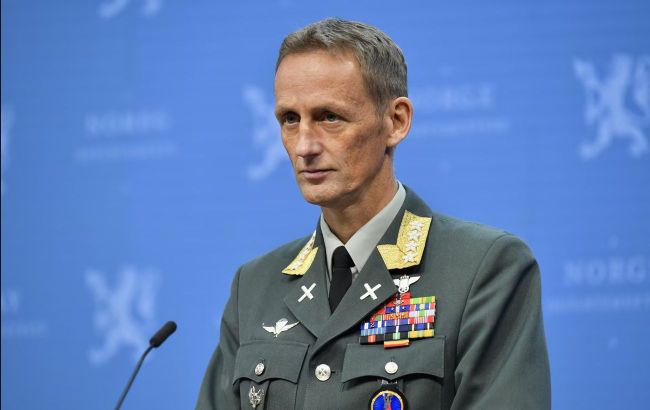 Photo: Commander-in-Chief of the Norwegian Army, General Eirik Kristoffersen (Getty Images)
Norway does not rule out the scenario of a Russian invasion and seizure of part of its territory. This may be necessary for Moscow to protect its nuclear assets in the Far North, according to the Commander-in-Chief of the Norwegian Armed Forces, General Eirik Kristoffersen.
Read also Europe cannot depend on Trump: Pistorius urges stronger defense
"We don’t exclude a land grab from Russia as part of their plan to protect their own nuclear capabilities, which is the only thing they have left that actually threatens the United States," Eirik Kristoffersen says.
According to him, Russia does not have any expansionist goals regarding Norway in the same sense as it did in Ukraine or other former Soviet territories.
The general emphasizes that a significant part of Russia's nuclear arsenal is concentrated on the Kola Peninsula, near the Norwegian border. This includes nuclear submarines, land-based missile systems, and aircraft capable of carrying nuclear weapons.
Kristoffersen says that these forces will be crucial in the event of a conflict between Russia and NATO in another region.
"We don’t take that off the table, because it’s still an option for Russia to do that in order to make sure that their nuclear capabilities, their second strike capabilities, are protected. That’s sort of the scenario in the high north that we plan for," the Commander-in-Chief adds.
Europe preparing for war with Russia
Europe began preparing for a possible war with Russia from the very beginning of Russia's full-scale invasion of Ukraine, but this issue began to be taken more seriously after Moscow's large-scale drone provocations in the EU last year.
Russia's invasion is considered most likely to begin in the Baltic states, but other countries, including the United Kingdom, Germany, France, and other NATO states, are not ruling out aggression.
At the same time, Europe has begun to rely on its own defense forces, distancing itself from the US, despite the fact that Washington plays a key role in the bloc's collective defense system and is considered the most powerful ally within the Alliance.
The change in NATO's orientation stems from the policy of US President Donald Trump's administration, which has called on European states to increase their spending on collective defense and rely more on their own forces.