North Korea officially rejects reunification with South Korea

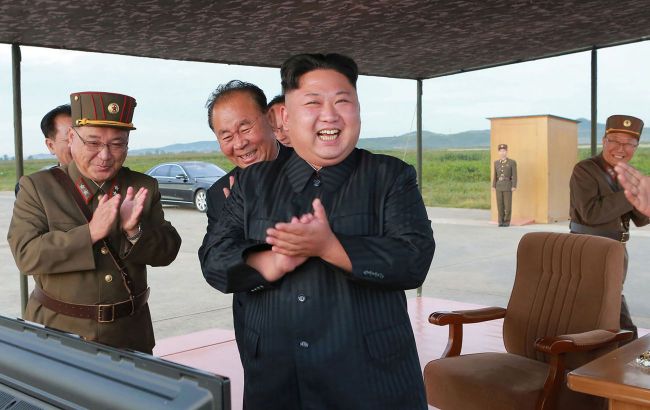 Photo: North Korean leader Kim Jong Un (Getty Images)
North Korea has amended its constitution to define its territory as bordering South Korea. All references to a possible reunification of the two countries have been removed from the document, according to Reuters.
The amendment, which was adopted at the March session of the Supreme People's Assembly, Pyongyang’s legislative body, marks the first time North Korea has added a territorial clause to its constitution.
Now, the DPRK defines its territory as the lands bordering China, Russia, and South Korea, including territorial waters and airspace.
The clause also states that North Korea will never tolerate any violation of its territory, but it does not specify the location of its border with South Korea, nor does it explicitly mention disputed maritime boundaries, such as the Northern Limit Line in the Yellow Sea.
All references to Korean reunification have also been removed from the document, including terms such as peaceful reunification and great national unity.
The achievements of the late state founder, Kim Il Sung, and the late father of the current leader, Kim Jong Il, have been removed from the document.
The new version of the Constitution elevated Kim Jong-un’s status; he is named head of state and, for the first time, ranks above the Supreme People's Assembly.
He is also granted the right to command nuclear forces and delegate these powers.
South Korea and North Korea conflict
The conflict between North Korea and South Korea has persisted since the mid-20th century and dates back to the end of World War II, when Korea was divided into two spheres of influence—the Soviet sphere in the north and the American sphere in the south.
The Korean War began in 1950, lasted until 1953, and ended with an armistice, not a peace treaty. This means that, technically, the war is still not over.
After the war, the two countries developed in completely different ways: South Korea became a democratic and economically developed nation, while North Korea became an isolated authoritarian state with strict government control.
Between them lies a demilitarized zone, which is one of the most heavily fortified borders in the world.
From time to time, military incidents occur between the two sides, including artillery shelling or missile launches by the DPRK.
In October 2024, North Korea officially designated South Korea as an enemy state.
North Korea is also actively developing a nuclear program, which is the main source of tension in the region.
According to Bloomberg, North Korea’s nuclear arsenal is already capable of overcoming the US missile defense system.