New US Navy AI learns to spot submarines in 5 minutes

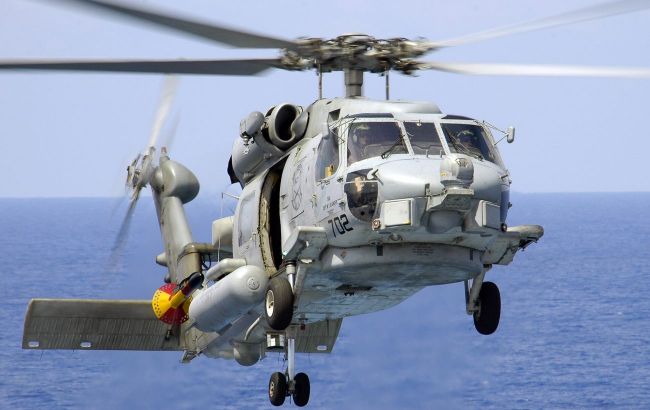 Photo: MH-60R Seahawk helicopter (Wikipedia)
Lockheed Martin tested its SensorMAX artificial intelligence system during the RIMPAC 2026 exercises. It is capable of learning a submarine’s new acoustic signature in a matter of minutes and transmitting the updated recognition model directly to helicopters in flight, according to Army Recognition.
How SensorMAX system works
The tests took place during the RIMPAC 2026 exercises off the coast of Hawaii—the world's largest multinational naval exercises. Two MH-60R Seahawk helicopters, equipped with the SensorMAX system, conducted anti-submarine missions against a simulated submarine threat.
The helicopters deployed hydroacoustic buoys that recorded underwater sounds, and the data collected was simultaneously transmitted to the helicopters and to a ground station.
Artificial intelligence continuously analyzed these acoustic signals, identifying suspicious noises and highlighting potential submarine contacts for the crew to evaluate. According to Lockheed Martin, the system is capable of simultaneously processing up to eight data streams from the buoys—twice as many as older sound processing systems can handle.
Why five-minute training became key
The main achievement of the tests was SensorMAX's ability to quickly retrain itself upon detecting an unfamiliar acoustic signal. Operators flagged the new data, and the system initiated a retraining cycle that took less than five minutes—after which the updated recognition model was transmitted back to the helicopters via a secure communication channel, allowing them to continue their mission.
Previously, integrating new acoustic data into combat systems took weeks or months—due to analysis, software development, and cybersecurity certification. This compact update, however, allows helicopters to gain enhanced recognition capabilities right during a combat mission, without having to return to base.
This development is part of the US Navy's broader concept of Distributed Maritime Operations (DMO), which envisions that in the future, similar AI systems will serve not only MH-60R helicopters but also P-8A Poseidon patrol aircraft, destroyers, and unmanned surface and underwater vehicles.
Earlier, the Danish startup BlueShadow explained how its Blue Dragon system would defend Odesa against Shaheds with a minimal number of personnel.
The US Navy has also ordered $76 billion worth of Columbia- and Virginia-class submarines.