New Orbán for Europe? 5 politicians could disrupt EU unity

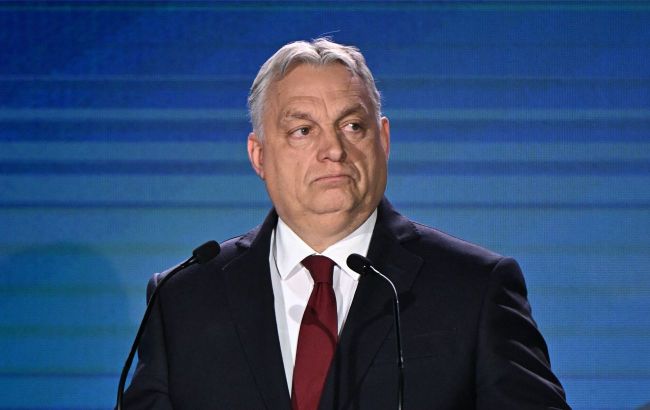 Hungarian Prime Minister Viktor Orbán (photo: Getty Images)
Hungary's prime minister lost parliamentary elections, leaving his role as the EU's top disruptor vacant. Five politicians could take over from Viktor Orbán, Politico reports.
The publication notes that the changes are taking place at a delicate moment, when the bloc relies on unity to adopt sanctions, budgets, and other decisions that still require unanimity.
For many years, Orbán used his veto power to block key initiatives, including those related to EU support for Ukraine.
"My impression is that the political business model of being a systemic and structural disrupter broke down with (Orban's party - ed.) Fidesz's severe election defeat," a European diplomat said.
At the same time, Politico reminds us that the European Council still includes several of Orbán's allies and a few potential new spoilers. The publication named five politicians who are most likely to take over from the Hungarian prime minister and become the new main enemy of the bloc.
Prime Minister of Slovakia Robert Fico
The Slovak prime minister has often been a loyal partner of Orbán in vetoes, joining his pro-Russian colleague in blocking sanctions against Moscow and demanding exemptions from the EU's €90 billion loan for Ukraine.
It is noted that with Orbán's departure, Fico remains the only closest friend of the aggressor country in the EU.
Earlier, Fico warned that he could veto the €90 billion tranche for Kyiv instead of Orbán if the Hungarian leader lost the elections.
Prime Minister of Czechia Andrej Babiš
The publication writes that the 71-year-old billionaire has already shown some Orbán-style tendencies. Babiš was the only leader, along with the prime ministers of Hungary and Slovakia, who demanded that Czechia be excluded from the EU's €90 billion loan for Ukraine.
He also called for reducing support for Kyiv, although he ultimately did not dare to cancel the Czech initiative to supply ammunition to support Ukraine's defense.
In addition, Babiš criticizes EU climate policy. He strongly opposes the carbon emission quota system, claiming it is destroying the Czech industry.
Prime Minister of Italy Giorgia Meloni
One EU diplomat noted that Meloni has proven to be a politician of a "totally different breed" than Orbán. However, another warned that she comes from the same political circle as the Hungarian prime minister and should not be underestimated.
"At the last European Council, the only person to have agreed with Orbán was Meloni. You can see there is an ideological link between the two of them," a European diplomat noted, referring to the Italian prime minister's statement that she understands Orbán's position on the loan for Ukraine.
Former Prime Minister of Slovenia Janez Janša
The former long-time prime minister of Slovenia came in second place, just one position behind, in last month's elections.
Janša, who is also called a "mini-Trump," would join the growing ranks of populists in the EU if he returns to power.
At the same time, there is a notable difference between Janša and Orbán or Fico: the Slovenian politician supports Ukraine's EU membership and visited Kyiv in 2022 at the start of the full-scale invasion to express his support.
Former President of Bulgaria Rumen Radev
Radev stepped down in January to launch a new party and run in parliamentary elections. Politico, citing polling data, writes that the politician has strong chances of winning.
This could become a problem for Ukraine and its European allies. In particular, in 2025, Radev said that Ukraine is "doomed" in the war against Russia and argued that increasing EU military aid or "pouring more weapons" into Kyiv is not a solution.
He also accused European leaders of encouraging Kyiv's counteroffensive, saying it led to "hundreds of thousands of victims" in Ukraine.
Elections in Hungary
The Tisza party, led by Péter Magyar, won a decisive victory in the parliamentary elections on April 12, securing 138 out of 199 seats. Voter turnout reached nearly 80%, the highest level in Hungary since the fall of the socialist bloc.
After that, Viktor Orbán conceded defeat. His position was not saved even by public support from the White House and the Kremlin.