Netherlands plans drone-equipped camps for captured Russian soldiers

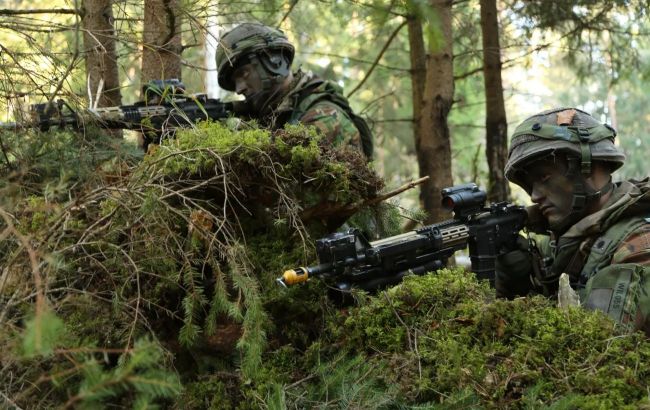 Armed forces of the Netherlands (Photo: U.S./Spc. John Cress Jr.)
The Dutch army has begun large-scale testing of a new type of prisoner-of-war camp in Marneheizen. The special facility is designed to hold up to two thousand Russian soldiers simultaneously, according to NL Times.
The Dutch military is conducting exercises of this scale for the first time in 30 years. The command considers scenarios of mass capture of enemy troops to be entirely realistic. The temporary centre at the Groningen training ground is intended to demonstrate how to effectively process large flows of detainees who will be kept far from the front line.
Brigadier General Nicole de Wolf emphasized that the army is not copying old models. The military studied Cold War-era blueprints only to understand basic needs. The camp's design has been completely rethought to meet modern requirements.
Drones instead of guards
The facility's appearance differs significantly from classic prisons. There are no conventional towers with armed sentries. Instead, security is provided by tall poles equipped with modern surveillance cameras.
Drones constantly patrol above the camp, transmitting real-time video to the central command post. This solution allows for a significant reduction in personnel while increasing monitoring efficiency.
Prisoners are to be housed in small white barracks. Inside, bunk beds are installed. Interestingly, officers and enlisted personnel are not separated — they are housed in mixed groups.
For potential Russian occupiers, entirely European conditions will be provided. Prisoners of war will have access to individual open courtyards for exercise, shared shower facilities, a canteen, and a medical station.
All personal belongings and mobile phones must be handed over immediately upon arrival. However, they are allowed to write paper letters home.
"They can expect accommodation that is at least as ‘comfortable’ as that in which our own troops live," said Brigadier General Nicole de Wolf.
How NATO is preparing for a possible Russian attack
The Alliance has already named specific targets on Russian territory that NATO is preparing to strike in response to aggression. Kaliningrad (temporarily occupied Königsberg), the Kola Peninsula, St. Petersburg, and the Black Sea area would be hit immediately.
Meanwhile, Lithuania, Poland, and France are conducting joint exercises from June 16 to 26 near the Suwałki Gap — the strategic isthmus between Belarus and Kaliningrad.