NATO warns Europe cannot deter Russia without American support

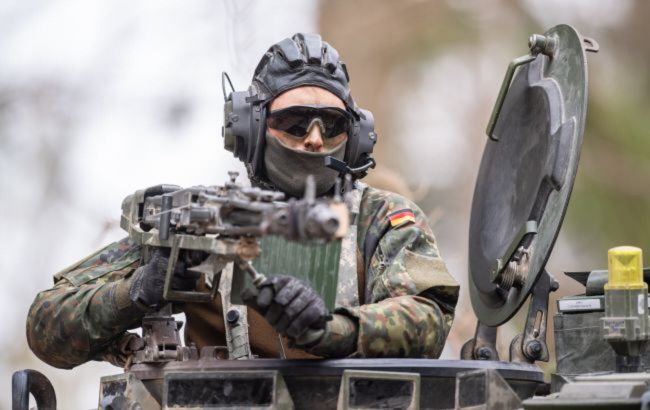 Photo: Europe still shows dependence on the US (Getty Images)
European countries are capable of producing modern weapons, but they remain critically dependent on the US for intelligence, logistics, and command capabilities. Without American deterrence capabilities, containing Russia would be extremely difficult, according to Politico.
Also read: Ukraine's DELTA AI becomes a digital weapon, detecting Russian targets in 2 seconds
European countries can produce modern weapons but remain critically dependent on the US for intelligence, logistics, and command. Without American deterrence capabilities, containing Russia would be extremely difficult.
The outlet notes that NATO Secretary General Mark Rutte publicly mocked the idea of defending Europe without US support, stating that the continent lacks sufficient capabilities without American assistance.
While Europe’s industrial base can produce tanks, aircraft, missiles, and artillery, it still relies heavily on the Pentagon for intelligence, logistics, communications, and command-and-control systems, the components that make all combat platforms effective.
EU Defense Commissioner Andrius Kubilius said Europe must be ready to replace American strategic capabilities with its own. Experts, however, note that full independence from the US would be extremely costly and time-consuming.
According to Rutte, such a move could cost up to 10% of GDP, double the current NATO defense target. Analysts at the International Institute for Strategic Studies estimate potential costs at roughly $1 trillion.
Where Europe already has alternatives
In aerial surveillance, NATO countries are seeking alternatives. Some allies are considering the European Saab GlobalEye to replace the US Boeing E-7A Wedgetail.
For air defense, alongside American Patriot systems, the Franco-Italian SAMP-T system, already in use by Ukraine, is available.
Europe also has transport aircraft such as the Airbus A400M, though it lags far behind the US in aerial refueling capability; the US fleet has about 450 tankers compared to roughly 156 in Europe.
Greatest vulnerability – intelligence and space
Europe’s most significant weaknesses lie in intelligence and space capabilities, where it relies heavily on the US European countries depend on American satellite data and surveillance systems, the outlet notes.
After the temporary suspension of intelligence sharing between the US and Ukraine, Kyiv and its allies have sought alternatives. Ukraine, for instance, uses data from the Finnish company ICEYE, while Emmanuel Macron stated that Paris provides roughly two-thirds of Ukraine’s intelligence support.
The EU is also developing its own IRIS² satellite system, intended as a Starlink alternative, though it is not expected to launch before 2030.
Political factor
Political fragmentation within the EU poses another challenge. Defense decisions often require unanimity, slowing rapid action. Experts emphasize that Europe’s main problem is less a lack of resources than a lack of coordination.
Amid growing doubts about the long-term reliability of the US as a security partner, the question of Europe’s strategic autonomy has become a key issue for the continent’s future.
Recently, Europe has sought greater independence from the US in defense matters. Washington has urged NATO partners to become more self-reliant, and last year EU countries were expected to raise defense spending to 5% of GDP, a target advocated by former President Trump.
Despite aspirations to reduce dependence on Washington, Europe realistically assesses that in the event of conflict, the continent could not manage without the US.
At the same time, NATO Secretary General Mark Rutte said the alliance is currently strong enough to deter and defeat any aggressor.