NATO's not ready for drone war, Estonia drills reveal brutal reality - WSJ

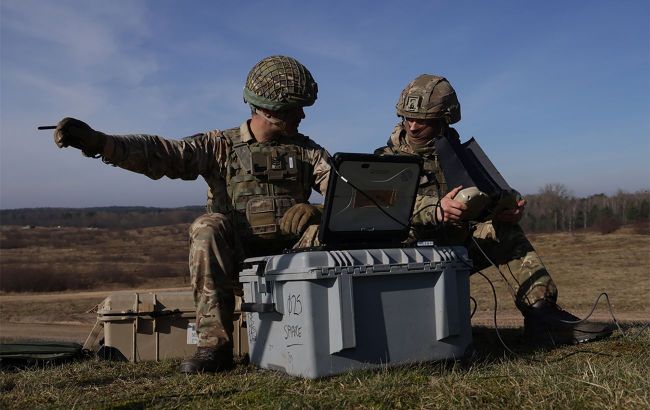 Photo: NATO not ready for modern warfare (Getty Images)
Large-scale NATO exercises in Estonia exposed serious weaknesses in the Alliance’s ability to fight next-generation wars dominated by drones, according to The Wall Street Journal.
Last year, Estonia hosted large-scale Hedgehog-2025 drills involving more than 16,000 troops from 12 NATO member states. Ukrainian drone warfare specialists, including frontline soldiers, also took part.
According to Arbo Probal, head of the drone systems program for Estonia’s Defense Forces, the exercises simulated a “contested and congested” battlefield designed to maximize stress and cognitive overload for units, testing their adaptability.
However, during one scenario, a NATO battle group of several thousand troops — including a British brigade and an Estonian division — effectively ignored the new reality of total battlefield transparency during an offensive.
“The NATO battle group simply moved around without camouflage, setting up tents and armored vehicles. Everything was destroyed,” said one participant who played the role of the opposing force.
Ukraine’s “Delta” vs NATO battalions
During the maneuvers, Ukrainian forces used the “Delta” battlefield management system. The platform collects real-time intelligence, analyzes it using artificial intelligence, identifies targets, and coordinates strikes.
This enables a rapid “kill chain”: detect, transmit information, and strike within minutes.
A single Ukrainian team of about 10 people acting as the simulated enemy managed in half a day to imitate the destruction of 17 armored vehicles and conduct 30 additional strikes on other targets.
According to Aivar Hanniotti, who led the opposing unit of about 100 personnel, more than 30 drones operated in an area of less than 10 square kilometers. That is only half the drone density currently seen on Ukraine’s front line.
“There was no possibility to hide. We quite easily found cars and mechanized units, and we were able to take them out quite fast with strike drones,” Hanniotti said.
Overall, the simulated enemy was able to effectively “eliminate” two battalions in a single day, rendering them combat ineffective.
Shocking results
Former commander of Estonia’s Military Intelligence Center, Sten Reimann, described the results as “shocking” for military officials and personnel.
They demonstrated how transparent the modern battlefield has become — and how vulnerable any equipment or unit is without proper camouflage, rapid data exchange, and adapted tactics.
Another key challenge is decision-making speed. Ukrainian forces actively share large volumes of data between command and units, accelerating strikes. In many NATO armies, however, there remains an instinct to restrict access to sensitive information, slowing the kill chain.
Retired General David Petraeus emphasized that identifying problems does not mean solving them.
“Lessons are not learned when they are identified. Rather, they are only learned when you develop new concepts, write new doctrine, change organizational structures, overhaul your training, refine leader development courses, set out new materiel requirements that drive the procurement process, and even make changes to your personnel policies, recruiting, and facilities,” he said.
Estonia has already begun updating its doctrine and training in light of lessons from drone warfare, increasing defense spending, and collaborating with the tech sector.
At the same time, according to Maria Lemberg of Aerorozvidka, many NATO members still show “a fundamental lack of understanding of the modern battlefield” and continue training troops using outdated manuals.
One commander, observing the simulation results, summed it up bluntly: “We are f*****.”
Lieutenant Colonel Probal stated that the primary objective was to encourage military personnel to think critically and avoid complacency. If that was achieved, he said, “mission accomplished.”
Russian threat to NATO
European officials have repeatedly warned about the Russian threat to NATO countries.
EU Defense Commissioner Andrius Kubilius has said Russia could be ready to test NATO’s defenses within the next two to four years — by 2030. He suggested the Baltic states could be among the most likely targets of renewed Kremlin aggression.
According to Estonian intelligence, Russia is not capable of launching an attack on NATO in 2026 or 2027, but plans to significantly increase its military presence along the Alliance’s eastern flank.