NATO lacks power for prolonged war, Navy commander warns

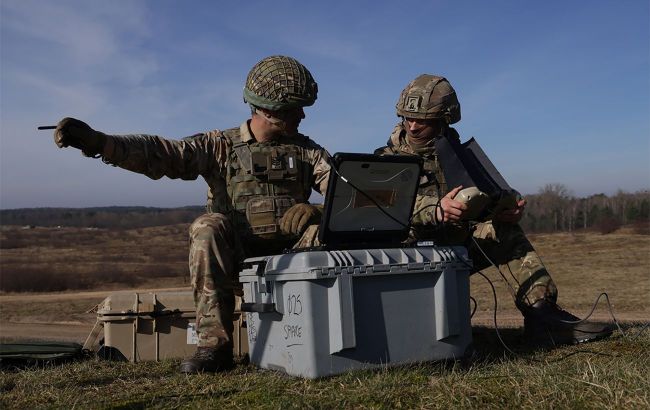 Photo: NATO lacks the resilience to wage a protracted war (Getty Images)
NATO forces currently lack the resilience to wage a protracted war, according to Mike Utley, the Vice Admiral of the Royal Navy, who heads NATO's Joint Maritime Command.
Utley says that Western armed forces need to prepare for a more complex battlefield, ranging from cyber threats to military ones.
According to him, NATO has an advantage over Russia in terms of capabilities, but is not necessarily able to maintain these capabilities over a long period of continuous combat operations.
"Have we got the resilience that we would wish to have? I think the commentary over the last 10 months has shown that, no, we haven’t. But nations have very much recognized that and are prepared to invest in those capability sets to grow our resilience," the commander says.
Senior European security officials are sounding the alarm about the need to prepare for a possible conflict with Russia as Moscow steps up its hybrid attacks on Europe.
NATO Secretary General Mark Rutte said last week that "Russia could be ready to use military force against NATO within five years", and said the alliance "must be prepared for the scale of war our grandparents or great-grandparents endured."
In recent days, new leaders of the British intelligence services and armed forces have issued similar warnings, with MI6 chief Blaise Metreweli saying that Europe is "operating in a space between peace and war." Chief of the Defence Staff Richard Knighton separately noted that more Britons should be prepared to fight for their country.
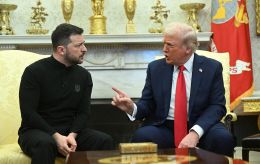
US President Donald Trump's desire to accelerate peace talks between Russia and Ukraine has once again raised concerns that he wants to shift his focus away from Europe, although leaders on the continent hope that critical provisions in the National Defense Authorization Act, backed by Congress, will make it difficult for the US to withdraw troops and key weapons systems from the region.
Even if a ceasefire is reached, Western security officials assess that Vladimir Putin will continue military operations in Ukraine and carry out hybrid attacks elsewhere.
Although all NATO members except Spain agreed this year to spend at least 3.5% of their economic output on core defense programs and another 1.5% on related areas by 2035, they are slower to allocate these funds. The United Kingdom has postponed the revealing of its own defense investment plan until next year.
At the same time, Utley notes that NATO's investments will eventually match the range of challenges.
"I am a realist — money is difficult and there are lots of competing priorities for all our allies on how they spend their taxpayers’ money. I’m not going to pretend that defense should have every penny to spend on every single capability that’s available. It’s about prioritization," he says.
Russia is preparing for war with NATO
Several NATO countries have previously warned that Russia could be ready for a serious confrontation with the Alliance within three to five years after the end of the war in Ukraine.
Against this backdrop, Estonia, Lithuania, and Poland intend to spend more than 5% of their GDP on defense next year, while other NATO members are also increasing their military budgets.
EU Defense Commissioner Andrius Kubilius said that German intelligence has evidence of discussions in the Kremlin about a possible plan to attack NATO.
According to the ISW, Russia has already stepped up its information and psychological campaign, which may be part of preparations for a potential war with NATO. The Russians may stage a provocation under a false flag.
Earlier, Finnish Prime Minister Petteri Orpo said that Russia would redeploy its troops to NATO's eastern flank if a peace agreement to end the war in Ukraine were concluded.
At the same time, Vladimir Putin calls the idea of a plan to attack NATO nonsense that is impossible to believe.