NASA engineers extreme-cold battery designed for lunar survival at -170 °C

 NASA develops batteries for survival on the Moon (photo: Ryan Hill/NASA)
NASA has successfully tested a prototype solid-state battery capable of withstanding extreme cooling down to -170 degrees Celsius without any damage, according to NASA.
Survival in the extreme conditions of Earth's satellite
Temperatures near the Moon's South Pole during the lunar night can drop to -200 degrees Celsius.
Under such conditions, traditional lithium-ion batteries become unusable, as the liquid electrolyte inside them freezes, and in a vacuum, it can boil or expand.
The battery developed under the SPEARS project solves this problem by using a solid ceramic or polymer electrolyte.
During tests at the Langley Research Center in Virginia, scientists recorded the following results:
- Operating range: The batteries stably generate energy at temperatures from minus 60 to plus 80 degrees Celsius.
- Limit mode: The batteries retained the ability to operate when cooled to -80 degrees Celsius, although with reduced performance.
- Resistance to critical temperatures: The cells withstood a temperature range from -170 to +100 degrees Celsius without any physical structural damage.
Researchers clarified that at a temperature of -170 degrees, the battery does not generate current but remains undamaged. Short-term heating is sufficient to restore its operation.
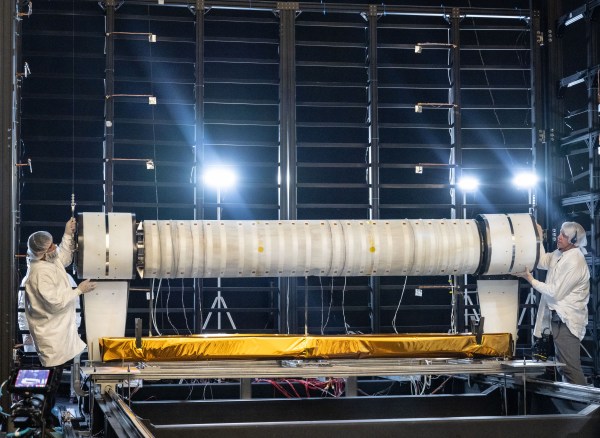
Vertical Solar Array Technology – VSAT (photo: NASA)
Lighter equipment for future Artemis missions
The ability of batteries to withstand deep cooling without damage will allow for the simplification of spacecraft design. Lunar rovers and scientific instruments will no longer require heavy constant heating systems, which consume a significant portion of energy.
The new batteries are planned for use in lunar rovers, scientific equipment, and emergency systems for astronauts of the Artemis mission.
In the future, the technology could be adapted for aviation, drones, electric vehicles, and portable electronics on Earth.