Million-year-old settlement: Where to find Ukraine’s oldest village

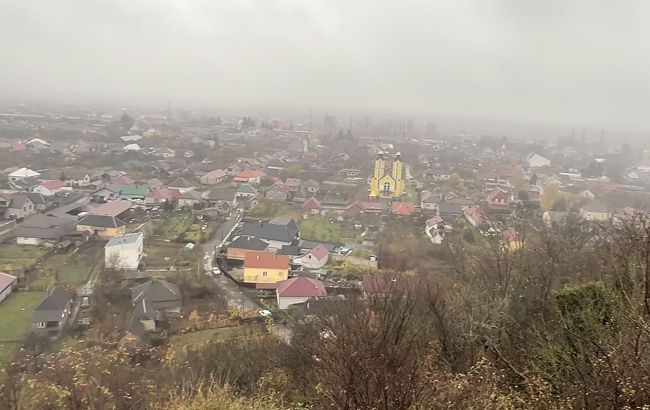 Where Ukraine’s oldest village is located and what makes it interesting (screenshot from video/youtube.com)
In Ukraine, there are villages whose history began long before the emergence of states, borders, or even writing. One such place is Korolevo in Zakarpattia, a village where archaeologists have found evidence of human life dating back tens of thousands of years. In winter, visitors come here not for mass tourism, but for the quiet, the landscapes, and the sense of deep time.
RBC-Ukraine explores what makes Ukraine’s oldest village remarkable and what can be discovered there.
A village with prehistoric roots
Korolevo is often called one of the oldest settlements in Ukraine, and the reason lies in its unique archaeological finds. On the outskirts of the village, particularly at the Korolevo site, traces of Lower Paleolithic human activity have been discovered, dating back approximately 1.4 million years.
In the Krit Lany area on the southern edge of the village, a settlement from the early Iron Age (7th–6th centuries BCE) has been uncovered. Bronze artifacts have also been found around the village. These materials are used in scientific research as evidence of early human habitation in the Carpathian region.
It is important to note that this does not refer to the oldest village in a modern administrative sense, but to one of the oldest areas of continuous human life in Ukraine, which is what makes Korolevo unique.
The first written mention of Korolevo dates back to 1262, when Pope Urban VI referred to the settlement in a letter. The Niolab royal castle is first mentioned in 1279. In 1272, a charter was issued granting the Hungarian nobility permission to hunt bears, wild boars, and deer in the surrounding forests.
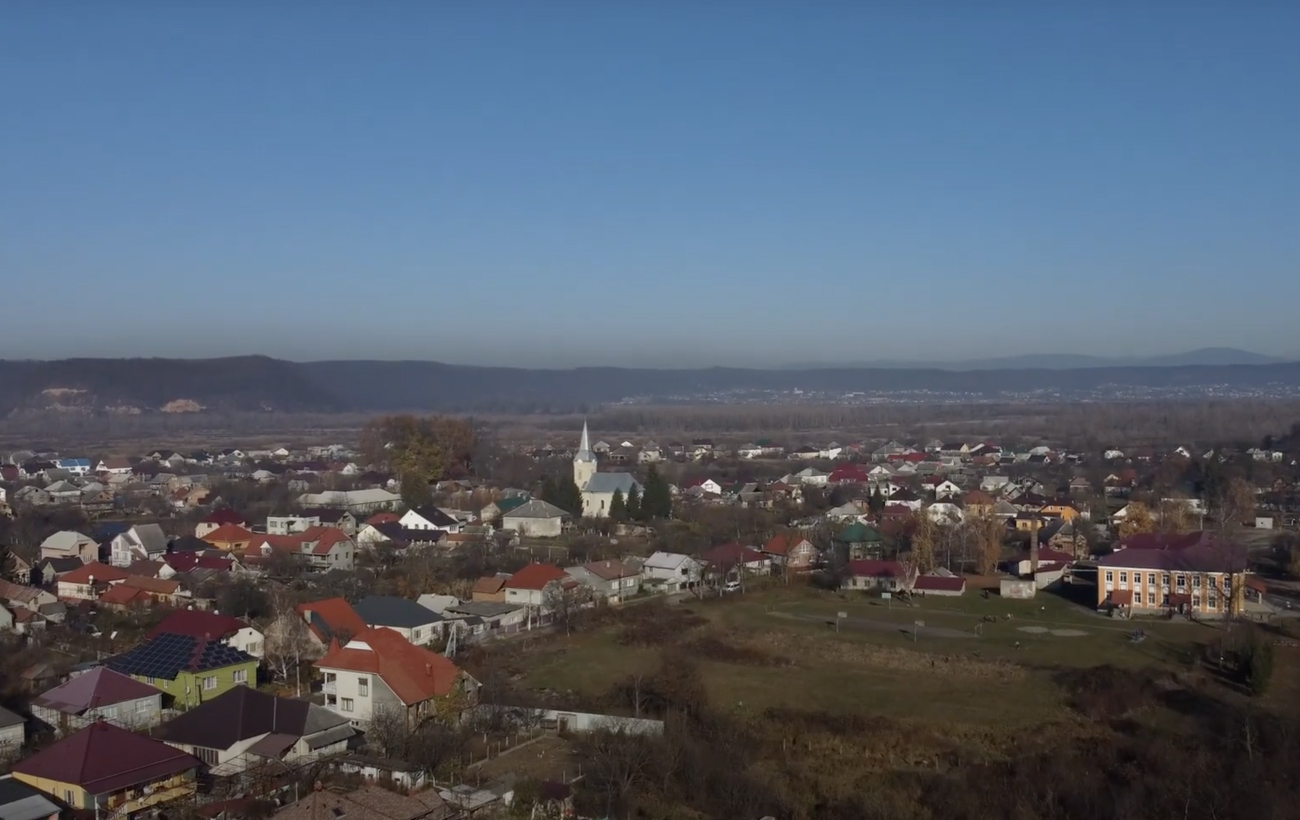 Modern look of Korolevo (screenshot/video youtube.com/EXPRES)
The municipal community used a coat of arms with complex symbolism: on a silver background, there is a church with a flying dove above it (representing the Parish Church of the Holy Spirit), a mountain with a tower standing on it (the ruins of Niolab Castle), and a fish (representing the Tysa River).
Additionally, the oldest book in Zakarpattia is considered to be the Korolevo Gospel, which was written in this village. The book dates back to 1401 and is still preserved in the village today.
To the northwest of Korolevo, one can see the famous Khust Gates, a unique natural phenomenon. Their width is about 3 kilometers. This is where the plain begins, which stretches for 80–100 kilometers before transitioning into the Great Hungarian Plain.
Thanks to these gates, cold northeast winds do not reach Korolevo, making the temperature here several degrees higher than in nearby towns such as Khust.
At the top of the mountain, which is part of the Khust Gates, remains of a Neanderthal settlement have been found, including chopping tools, scrapers, knives, and spearheads made of andesite and flint.
All of these discoveries, more than 60,000 items, are an important resource for studying the development of early human production, the way of life of prehistoric people, and their interaction with the environment.
Scientists are confident that the prehistoric site was once the bank of the Tysa River. Over time, the water carved a channel, deepening it by 100–120 meters. Even today, river pebbles can be found on the mountain top, serving as a reminder that this area was once a riverbank.
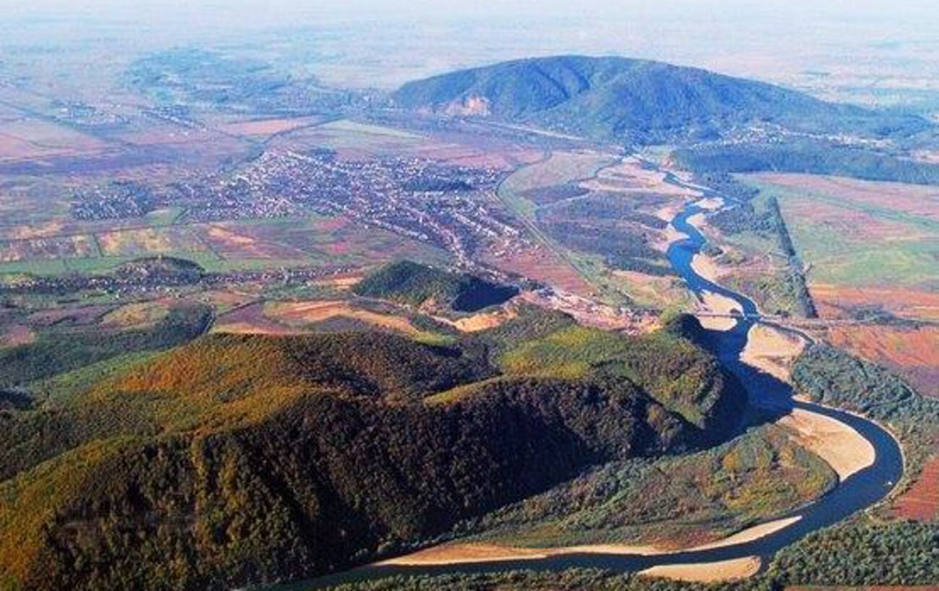
Korolevo from a bird’s-eye view (photo: Wikipedia)
Zakarpattia without embellishments or tourist clichés
Korolevo is located in the Berehove district of Zakarpattia, near the Tysa River and the foothills of the Carpathians. In winter, the village looks particularly authentic: snow-covered vineyards, hills without crowds, and old streets free from tourist noise.
Korolevo is surrounded by mountains on all sides: Chorna Hora (568 m) to the northwest, Sarhedb (393 m) to the east, Kamin (347 m) to the southeast, Frasyn (821 m) to the south, Kobola (615 m) to the east, and Irosla (598 m) to the east.
On clear, sunny days, you can see Tupyi Mountain (878 m) far to the north, Tovsta to the northeast, and the Kopanskyi Verkh mountains immediately north, just across the Tysa River.
This place is not about attractions or loud entertainment, but about slow observation, authenticity, and Ukrainian traditions. That is why it attracts visitors who seek peace rather than selfie routes.
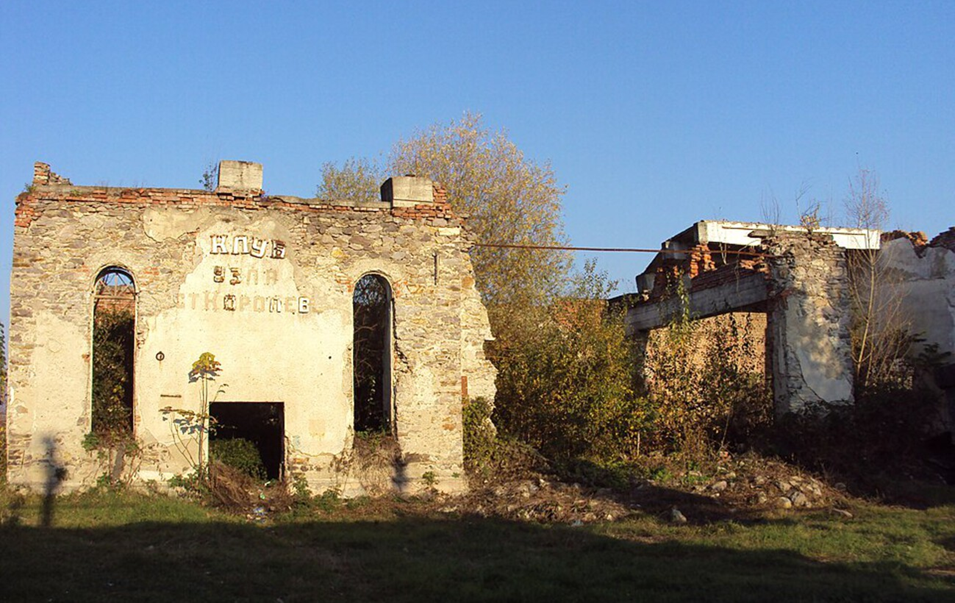 Ruins of the railway club (photo: Wikipedia)
What to see in winter
In the cold season, Korolevo reveals a different side. Walking tours around the village allow visitors to see archaeological sites, the natural terraces of the Tysa River, and landscapes that have changed little over thousands of years. Nearby are castle ruins in Zakarpattia, local wineries, and regional thermal springs.
Main tourist attractions:
-
Korolevo archaeological site;
-
Kruti Lany area;
-
Niolab Castle;
-
Korolevo Gospel;
-
Church of the Ascension of the Lord;
-
Miniature salt miner sculpture.
Winter here is not a drawback, but a competitive advantage: fewer people, more space, and a true sense of connection with the place.
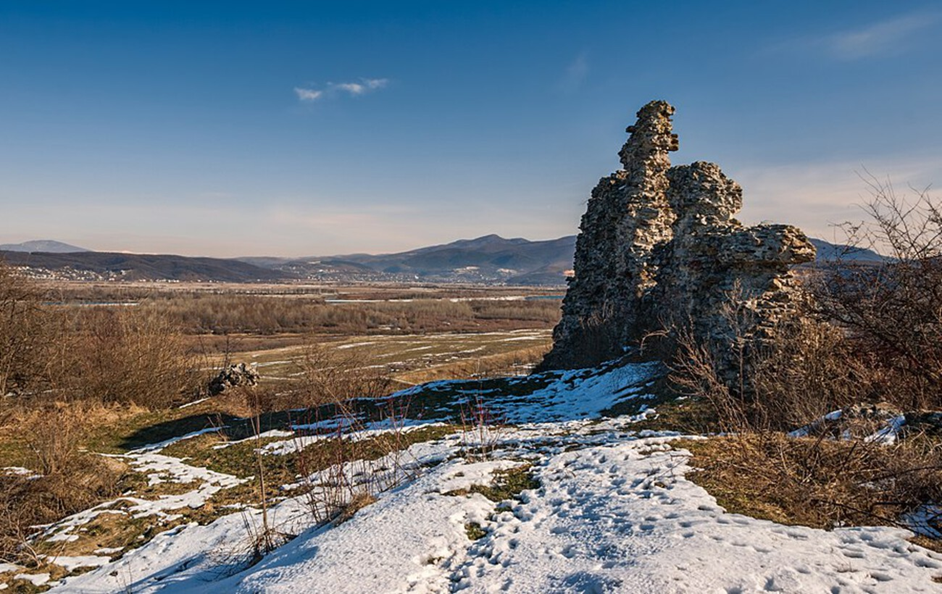
Niolab Castle (photo: Wikipedia)
Why you should visit now
Korolevo is an example of how Ukraine can tell its story not through flashy brands, but through the depth of its history. In winter, the village becomes an ideal destination for a weekend trip: no crowded routes, a strong cultural experience, and the calm of nature.
Sources: Wikipedia, the Institute of Archaeology of the National Academy of Sciences of Ukraine, and the Encyclopedia of the History of Ukraine.