Man didn't sleep for eight days: Here's what happened to his brain

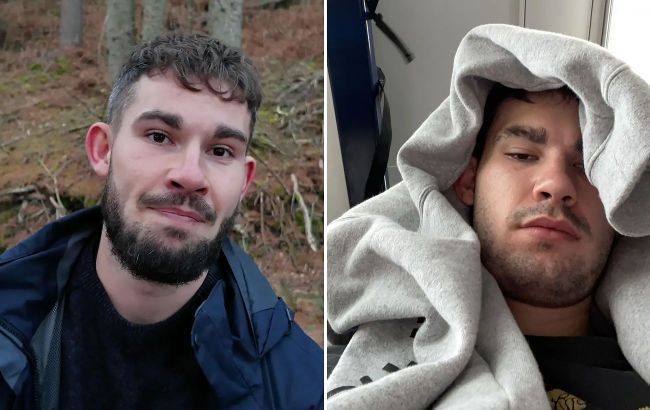 Tommy Graves reveals what happens after 8 days without sleep (collage: RBC-Ukraine)
Sleep deprivation isn’t just looking tired – it’s a real threat to mental health and can lead to irreversible consequences. Tommy Graves’ story proves that the line between productivity and manic psychosis is much thinner than we often think.
Metro reports how a 27-year-old man’s obsessive work led to an eight-day marathon of sleeplessness and why one in three people today is at risk.
Read also: Cosmic chaos ahead: Magnetic storms will test your strength this week
From fundraising to psychiatric hospital
27-year-old Tommy Graves was working on a live-stream charity project for the homeless. He became so obsessed with the idea that his brain simply refused to switch off.
Stress escalated into extreme insomnia, culminating in a manic episode with psychosis.
“The more I worked on it, the more stressed I became, the more ideas came into my head, and the harder I found it to sleep,” Tommy recalls.
When his family realized he was speaking coherently but completely illogically, they called an ambulance. Tommy was hospitalized in a psychiatric facility in a state of manic psychosis.
Life in the Truman Show
The scariest stage was hallucinations. Tommy was convinced he was not in a hospital but in a TV studio, surrounded by sets. He believed the doctors were actors filming him for viewers worldwide.
“I was hearing and thinking and seeing things that were not real,” he said.
Tommy developed plans to end wars, racism, and cancer in one sweep. When a nurse jokingly said he would get an Oscar if he kept going, he interpreted it as a real reward for his acting.
“I was extremely coherent, but I was not making sense,’ he remembers. ‘I had a plan to end rasism end sexism, end wars, cure cancer, all of these amazing things. By this point, I didn’t even know where I was. I thought I was in a television studio, like The Truman Show,'' Tommy shared.
Even after receiving medical help, he couldn’t sleep for some time – he sang, danced, and turned wheels in front of the “cameras” in the hospital. He was only able to sleep on the eighth day thanks to strong medication. Physical recovery took a month, but the psychological trauma and shame over his behavior lingered much longer.
How sleep deprivation harms the body: expert opinion
Dr. Sue Peacock, psychologist and sleep expert, warns that Tommy’s case is extreme but a logical result of ignoring the body’s needs. Extreme sleep deprivation negatively impacts both physical and mental health. Lack of sleep can cause:
-
Weakened immunity and increased risk of diabetes
-
Cardiovascular problems: hypertension, stroke, heart attack
-
Cognitive impairments: memory loss and a higher risk of Alzheimer’s disease
-
Mental disorders: from anxiety to acute psychotic episodes
A new life: sleep coach tips
When Tommy was discharged from the hospital, he felt intense shame and believed his life had fallen apart.
“I was incredibly embarrassed,’ he says. ‘My doctor said I needed to learn how to sleep, or I could risk losing my sense of reality again. I never thought that could happen to me. That was enough to scare me into picking up a book and figuring out how to sleep well,” he said.
Over the next few years, Tommy studied everything he could about sleep. Today, he has completely changed careers and become a certified sleep coach. He believes the modern late weekend nights and early weekday mornings culture is harmful.
“You end up in this vicious cycle of exhaustion – you’re trying to get over the late nights from the weekend, and you go into a week of early mornings, and then it’s back to the late nights again,” the coach emphasizes.
He shared his golden rules of sleep:
-
Consistent schedule: Go to bed and wake up at the same time every day.
-
Digital detox: No blue light from phones or TV 90 minutes before sleep.
-
Food break: Don’t eat within 3 hours of bedtime; digestion interferes with recovery.
-
Caffeine limit: No more than 400 mg per day, and none in the 8 hours before sleep.
-
Relaxation: Stop any mentally or physically stimulating activity one hour before bedtime.
Read also: How lack of sleep is affecting you: 10 warning signs
This material is for informational purposes only and should not be used for medical diagnosis or self-treatment. Our goal is to provide readers with accurate information about symptoms, causes, and methods of detecting diseases. RBС-Ukraine is not responsible for any diagnoses that readers may make based on materials from the resource. We do not recommend self-treatment and advise consulting a doctor in case of any health concerns.