Macron calls to halt strikes on Middle East energy facilities

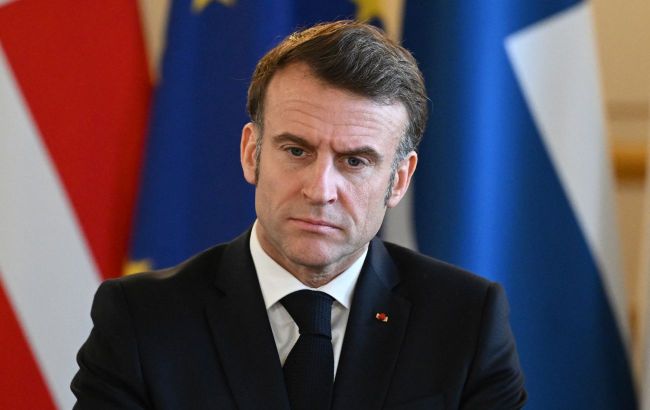 Photo: French President Emmanuel Macron (Getty Images)
French President Emmanuel Macron calls for a moratorium on strikes against civilian infrastructure in the Middle East.
"This escalation is reckless. Yesterday I spoke with President Trump, and last night he himself called on Iran to stop all these bombings and attacks on civilian infrastructure, gas, oil, and water facilities," Macron says.
He says he also spoke with the Emir of Qatar, Sheikh Tamim bin Hamad Al Thani, following a major strike on Qatar’s gas production facilities.
"Several other Gulf countries have been hit, for the first time, at their production facilities. This is a dangerous escalation. We call for a moratorium on attacks against civilian infrastructure and the civilian population and for a rapid de-escalation," the French President emphasizes.
Macron notes that now all parties must calm down.
"Hostilities must be halted for at least a few days to give negotiations a chance. This is a key point on our agenda. France, as always, advocates a return to negotiations, dialogue, and de-escalation," he adds.
Iran struck world’s largest LNG complex in Qatar
On the evening of March 18, Iran launched an attack on Qatar, resulting in one of its ballistic missiles hitting the industrial city of Ras Laffan, a key center for LNG production. A fire broke out at the facility, and QatarEnergy reported significant damage.
Qatar subsequently expelled Iran’s ambassador and gave other Iranian diplomats 24 hours to leave the country.
Shortly thereafter, the WSJ reported that Trump no longer wanted to strike Iran’s energy facilities.
Sources say he was aware of the Israeli attack and supported it as a message to Tehran regarding the blockade of the Strait of Hormuz. But once Iran, in Trump’s view, got the message, he was already opposed to further strikes.
Later, the US President promised to destroy the South Pars gas field if Iran attacks Qatar again.
Strikes on gas and oil infrastructure in the Persian Gulf have driven fuel prices to new heights. At the same time, analysts warn that the worst is yet to come.