Lindsey Graham's legacy: Will US pass 'crippling sanctions' against Russia after senator's death?


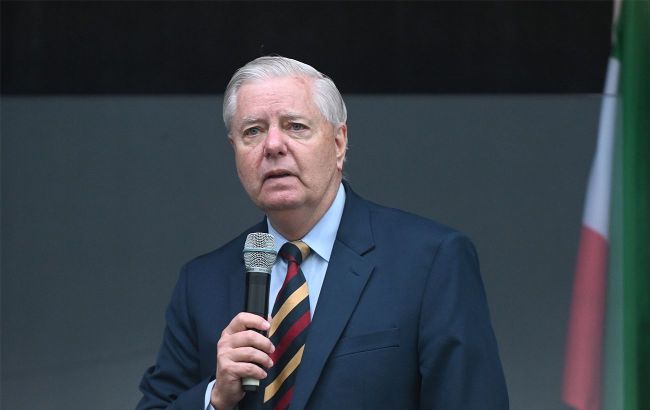 Photo: Lindsey Graham (Getty Images)
On July 11, US Senator Lindsey Graham died. Just a day earlier, on his birthday, he visited Kyiv — a symbolic final trip. Graham was a consistent supporter of US aid to Ukraine, but his influence extended far beyond that issue.
RBC-Ukraine explains what the senator was known for and why his death could slow down several initiatives important to Ukraine, including efforts to impose new US sanctions on Russia.
Key points:
- Before his death, he coordinated with the White House on the Graham–Blumenthal bill, which would impose "crippling tariffs" on Russia. However, passing the legislation is likely to require additional political effort in his absence.Main legacy:
- Ukraine track record: Consistently voted in favor of military aid for Kyiv, but sharply criticized President Volodymyr Zelenskyy in late 2024 following the Ukrainian leader's public clash with Donald Trump.
- Political balancing act: Combined meaningful reforms, including on immigration and the judiciary, with headline-grabbing legislative proposals that often served more as political messaging.
- Military background: Served as a US Air Force lawyer, is a veteran of three wars, and retired with the rank of colonel.
Lindsey Graham: From military lawyer to politician
Lindsey Graham was born in South Carolina and grew up in a family of small-business owners. He later studied psychology and law in college before joining the US Air Force as a military lawyer. Among other roles, Graham served as the Air Force's chief prosecutor in Europe, overseeing cases in military courts.
As a reservist, he was called to duty during the 1990–1991 Gulf War. In the 2000s, he also served in Iraq and Afghanistan, earning a Bronze Star for his service.
Because reserve duty is only part-time, Graham began his political career in 1992, first serving in the South Carolina House of Representatives. In 1994, he was elected to the US House of Representatives, launching his career on the national stage.
The senator wielded significant influence over the US judicial system. As chairman of the Senate Judiciary Committee, he played a key role in confirming conservative justices to the US Supreme Court. That effort became one of the Republican Party's most consequential domestic policy achievements in recent decades.
Despite his conservative reputation, Graham became known as a skilled dealmaker who often worked across party lines, drawing criticism from fellow Republicans. He frequently partnered with Democrats on major legislative initiatives.
Over the years, Graham worked on comprehensive immigration reform, helped reshape the military justice system, and supported some of the first major federal gun-control measures.
At the same time, he was highly adept at political messaging. Hundreds of bills he introduced in areas outside his core expertise often served more as legislative messaging tools than serious policy efforts, helping generate media attention, fend off criticism from the Republican right, and appeal to conservative voters.
Supporter of Ukraine — with caveats
In Congress, Lindsey Graham quickly earned a reputation as a foreign policy hawk. He became one of the closest allies of influential Senator John McCain. Together, the two lawmakers were outspoken critics of Russia, supported NATO enlargement, and advocated for a strong US military presence abroad.
For those reasons, Graham was a consistent supporter of Ukraine. He regularly voted in favor of military aid packages for Kyiv and, in 2022, called for supplying Ukraine with longer-range weapons, fighter jets, and other capabilities needed by the country's defense forces.
In July 2022, with Graham's backing, the Senate passed a resolution urging the secretary of state to designate Russia as a state sponsor of terrorism.
At the same time, Graham often displayed a pragmatic streak. In 2016, he was a fierce critic of Donald Trump, but later became one of the current US president's closest advisers and allies.
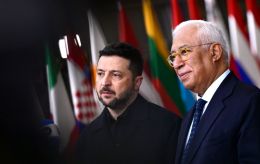
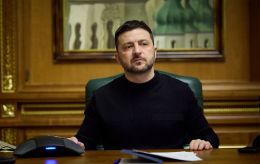
After the highly publicized clash between President Volodymyr Zelenskyy and President Donald Trump at the White House on February 28 last year, Graham issued a sharp rebuke.
"What I saw in the Oval Office was disrespectful, and I don't know if we can ever do business with Zelenskyy again"
He also said that Zelenskyy "either needs to resign or change" if he wanted to continue working with the United States.
However, as relations between Zelenskyy and Trump improved, Graham returned to his usual position of supporting Ukraine.
Unfinished mission
For Ukraine, Graham's most significant unfinished project remains the Graham-Blumenthal sanctions bill.
The bipartisan initiative, introduced with Democratic Senator Richard Blumenthal, would impose crippling trade tariffs on Russia in an effort to pressure the Kremlin into ending the war. The legislation was introduced last year, but its passage depended on receiving a green light from Trump.
Until recently, however, the US president had opposed tougher sanctions on Russia.
At a briefing in Kyiv, Graham said that in recent weeks he had reached an agreement with the White House on an updated version of the bill.
The senator's death does not mean that his sanctions initiative will be buried with him. On the contrary, many US senators have said that passing the legislation Graham championed so passionately in the final days of his life would be the best way to honor his memory.
"There can be no more fitting memorial to Lindsey, his legacy or the causes he fought for than to pass this legislation and realize his long-held dream of an independent and secure Ukraine," Senator Jeanne Shaheen said.
At the same time, the bill's fate will depend on other Republican senators. Whether any of them are as committed to supporting Ukraine as Graham was remains unclear.
The timing also adds pressure. The Senate must act quickly, as lawmakers are scheduled to begin their summer recess on August 10.
Quick Q&A
Q: Why did Senator Lindsey Graham support military aid to Ukraine?
A: Graham belonged to the Republican hawkish wing and advocated a strong US military presence abroad as well as NATO expansion. Alongside Senator John McCain, he spent years criticizing Russia, which is why he consistently voted in favor of military assistance for Kyiv and called for providing Ukraine with fighter jets and long-range missile systems.
Q: What does the Graham-Blumenthal sanctions bill against Russia propose?
A: The bipartisan initiative would impose crippling trade tariffs on Russia in an effort to economically pressure the Kremlin into ending the war. Shortly before his death, Graham said he had reached an agreement with the White House on an updated version of the legislation. Lawmakers are now expected to push for its passage as a way of honoring the senator's legacy.
Q: Why did Lindsey Graham call for Zelenskyy's resignation?
A: Graham often demonstrated a pragmatic political instinct and, on Ukraine-related issues, was heavily influenced by the position of Donald Trump, whose close adviser he became. When a public confrontation erupted between Trump and Zelenskyy in the Oval Office, Graham sided with the US president and issued a sharp statement, calling for either a change in Zelenskyy's approach or his resignation.