Kyiv's EW dome can't stop all drone attacks: Expert explains why


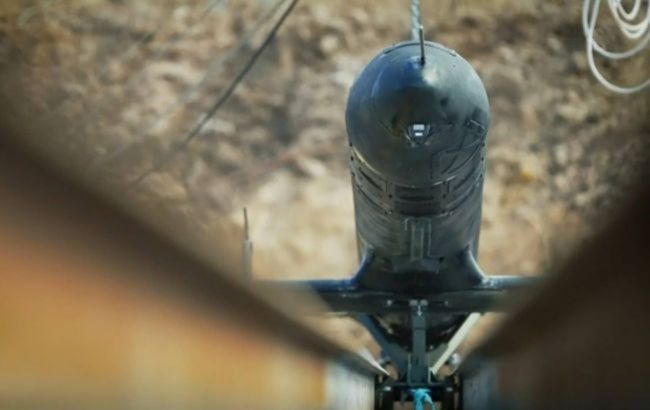 Russian drone dubbed Geran (video still)
Electronic warfare over Kyiv cannot replace physically shooting down drones and is only one layer of air defense, aviation expert Anatolii Khrapchynskyi says.
According to the expert, building a distributed electronic warfare network across hundreds of locations in a major city is a huge step forward and the right engineering response to a new threat. At the same time, he stressed that no "silver bullet" in technological warfare can permanently secure the skies.
When navigation channels are jammed, or mesh radio communications are disrupted, a drone is not destroyed but merely loses accuracy: its vision is impaired, its precise approach to the target is disrupted, and the number of possible attack scenarios is reduced. However, Khrapchynskyi noted that 50 or 100 kilograms of explosives traveling at high speed will continue moving due to inertia. Therefore, he considers only kinetic interception a guaranteed success, meaning the target must be reduced to debris before it reaches a residential area or critical infrastructure site.
The expert identified three challenges that Ukraine needs to prepare for.
-
First, the enemy's rapid adaptation. Given the expansion of launch infrastructure, including a drone port in the Millerovo area, he believes the Russians are preparing for a prolonged campaign involving large waves of strike drones. As soon as one frequency band is blocked, Russian engineers change frequencies, install highly directional antennas, or alter flight altitudes. According to Khrapchynskyi, Russians are already experimenting with different altitudes.
-
Second, autonomous guidance systems and machine vision. If a drone has a visual image of its target uploaded to its onboard computer, it does not matter during the final stage of flight whether GPS is working or whether it has a connection with its operator through a mesh network, the expert explained. Traditional electronic warfare is powerless against this kind of autonomous "brain," he said. The only options are to blind its optics as it approaches or physically destroy it.
-
Third, scaling Kyiv's experience to other cities. Khrapchynskyi believes this is necessary and noted that Ukraine has already developed a strong ecosystem of electronic warfare manufacturers. However, the defense configurations needed for Kyiv or Lviv, where drones take several hours to reach their targets, are fundamentally different from those required to protect Kharkiv, Zaporizhzhia, or Odesa.
The expert says Ukraine needs a unified, network-centric air defense system with distributed interception capabilities. In such a system, small tactical radars detect low-observable targets flying at extremely low altitudes; acoustic sensors and signals intelligence provide additional data; electronic warfare systems knock drones off course and disrupt swarm coordination; and interceptor drones, small-caliber artillery, or lightweight missiles complete the interception.
Khrapchynskyi stressed that Ukraine cannot simply keep chasing each new Russian upgrade. Ukraine must select and contract the tools it needs today to counter threats Russia will deploy six months from now.
"In this war, the winner will not be the one who builds the highest fence, but the one whose engineering capabilities and command system operate one step faster than the enemy's," he concluded.
Read also: Russia is trying to speed up jet-powered Shahed drones, expert warns
Earlier, Ukraine's presidential adviser on defense technology Serhii "Flash" Beskrestnov reported that a special operation to create an electronic warfare dome over Kyiv had been completed. The system disrupts mesh radio communications used by jet-powered Shahed drones.