Kallas says talks on Russian assets are becoming increasingly difficult

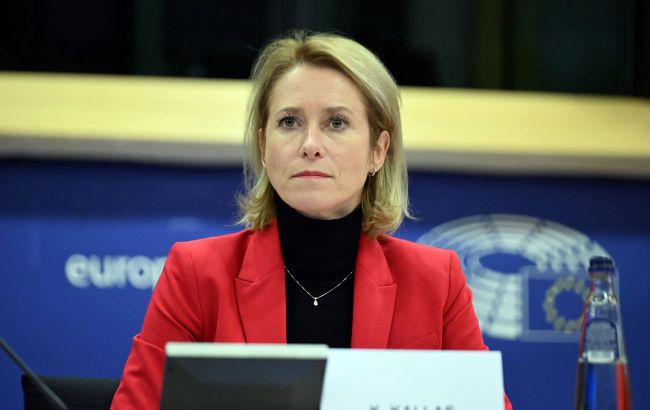 Photo: EU High Representative Kaja Kallas (Getty Images)
Negotiations on a reparations loan for Ukraine funded by frozen Russian assets are ongoing, but are becoming increasingly difficult, stated EU High Representative for Foreign Affairs and Security Policy Kaja Kallas, according to Politico.
According to her, financing Ukraine through a so-called reparations loan funded by frozen Russian assets is becoming "increasingly difficult."
"This (reparations loan - ed.) is what we're working on. We are not there yet, and it is increasingly difficult, but we're doing the work, and we still have some days," she said.
Kallas said there is "significant pressure from all sides" regarding the reparations loan, which she described as the "most credible option" for Kyiv's financial stability starting next year.
She also noted that the European Union will not make a decision on the reparations loan without Belgium's consent, as the largest share of Russian assets is held there.
"I think it's important that they are on board with whatever we do," the EU's top diplomat stressed.
Reparations loan for Ukraine
The European Union is currently considering providing Ukraine with a reparations loan secured by frozen Russian assets.
However, Belgium has voiced opposition. A large portion of Russia's frozen assets is held at the Belgian-based depository Euroclear.
Belgian Prime Minister Bart De Wever has demanded that the EU provide Euroclear with protection against potential risks, including the allocation of resources in case Russia imposes retaliatory sanctions.
On December 12, Russia's Central Bank filed a lawsuit against Euroclear in the Moscow Arbitration Court over the frozen assets. EU officials said Russia is attempting to obstruct compensation for the damage inflicted on Ukraine.
Meanwhile, Russia has reacted nervously to the EU's decision on December 11 to change the rules governing the extension of asset freezes. The new mechanism means unanimity is no longer the only option for maintaining the freeze on Russian assets, bringing approval of the reparations loan closer.