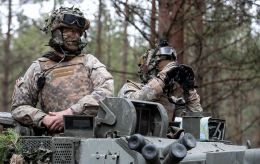
Japan expands lethal arms sales amid regional threats

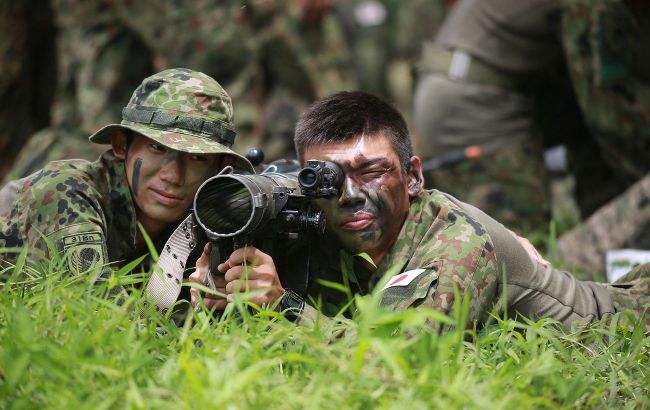 Photo: Japan Self-Defense Forces (Getty Images)
Japan has officially authorized the sale of domestically produced lethal weapons to other countries. This move effectively brings an end to the era of postwar pacifism that lasted more than eight decades, according to The New York Times.
Prime Minister Sanae Takaichi, at a cabinet meeting in Tokyo, has finally lifted long-standing restrictions on arms exports. The country has already signed a record-breaking $6.5 billion deal with Australia to supply military ships.
The head of government explained that the security environment has become too complex.
"No single country can now protect its own peace and security alone," Takaichi states.
Tokyo no longer relies on US
Tokyo's main partner, Washington, is becoming unpredictable. The Donald Trump administration recently withdrew some military assets from Asia. This came as a shock to the Japanese government. Now the country is seeking to show China, Russia, and North Korea that the Pacific democracies have their own weapons supply chain.
Experts call this a moment of truth. Keio University Professor Michito Tsuruoka says:
"The idea that the U.S. would champion the global order has turned out to be sort of an illusion, and that’s a very inconvenient reality. Now Japan is rushing to find viable alternatives for its own security and defense."
Frigates for the Philippines and submarines for Indonesia
The new rules give the Japanese defense industry a free hand. Companies can now sell lethal weapons directly to 17 countries.
Japan plans to supply modern frigates for the Philippines, submarines for Indonesia, air defense systems, and high-tech equipment.
However, certain restrictions remain. Japan still prohibits the transfer of weapons to countries where active hostilities are ongoing. An exception is possible only if Japan's own national security is threatened.
Takaichi assures that the country is not becoming an aggressor. She states, "there is absolutely no change in our commitment to upholding the path and fundamental principles we have followed as a peaceful nation for over 80 years since the war."
China's reaction and NATO's role
Beijing has already accused Tokyo of reviving the militarism of the World War II era. Tensions are escalating: last Friday, a Japanese ship sailed through the Taiwan Strait. In response, China dispatched vessels to Kagoshima Prefecture.
Against this backdrop, NATO is demonstrating solidarity with Tokyo. Norway’s representative to the Alliance, Anita Nergaard, called Japan’s decision "really valuable to us, to Europe and the entire alliance."
Japan's weapons
Tokyo is already actively cooperating with Kyiv in the development of modern drones. The first Terra A1 interceptor drones are already hunting down Iranian Shaheds. This drone is manufactured by a Ukrainian company in which the Japanese have invested.
Japan has also developed its own training drone based on the experience of the war in Ukraine. It costs only $450 and allows operators to train freely without fear of damaging expensive equipment.