Italy joins Belgium in criticizing EU plan to hand Russian assets to Ukraine

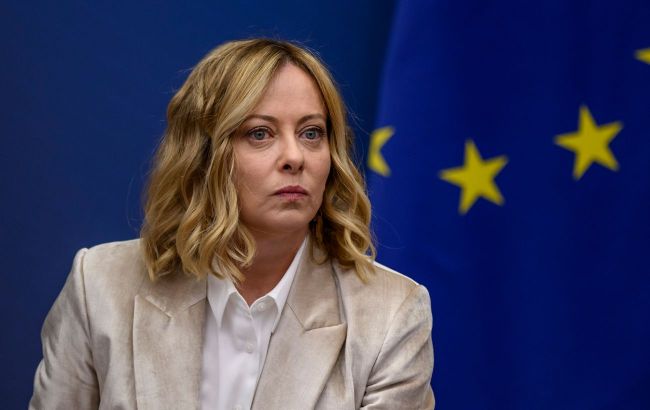 Photo: Italian Prime Minister Giorgia Meloni (Getty Images)
Italy is backing Belgium in opposing the EU plan to transfer €210 billion in frozen Russian state assets to Ukraine, according to Politico.
The outlet refers to an internal document it has reviewed.
Rome’s intervention — by the EU's third most populous country and one of its largest voting powers — less than a week before an EU leaders' meeting in Brussels undermines the European Commission’s hopes of finalizing an agreement on the plan, Politico writes.
The Commission is insisting that EU member states reach an agreement at the European Council summit on December 18–19 so that billions of euros from Russian reserves held at Belgium's Euroclear bank can be released to support Kyiv’s war-hit economy.
"Now Italy has shaken up the diplomatic dynamics by drafting a document with Belgium, Malta and Bulgaria urging the Commission to explore alternative options to using the Russian assets to keep Ukraine afloat over the coming years," the journalists write.
The four countries are referring to a Plan B that would involve issuing joint EU debt to finance Ukraine in the years ahead.
However, the outlet notes that the idea has its drawbacks. Critics argue that it would add to the already heavy debt burden of Italy and France and would require unanimity — meaning it could be vetoed by Hungarian Prime Minister Viktor Orban, who is aligned with the Kremlin.
"The four countries — even if joined by pro-Kremlin Hungary and Slovakia — would not be able to build a blocking minority but their public criticism erodes the Commission's hopes of striking a political deal next week," Politico writes.
EU decision on Russian assets
As previously reported, on December 12 EU countries decided to extend indefinitely the freeze on Russian assets.
Until now, bloc members had to renew the decision every six months. This created certain risks, as Hungary or Slovakia could have blocked it at any time.
EU leaders are expected to meet on December 18 to consider the possibility of granting Ukraine such a loan. Belgium opposes the initiative, citing concerns over lawsuits and possible retaliation from Moscow.
According to EU foreign policy chief Kaja Kallas, the EU will not return frozen assets to Russia until the aggressor country pays reparations to Ukraine.