Italian PM preparing candidate for EU negotiator on war in Ukraine

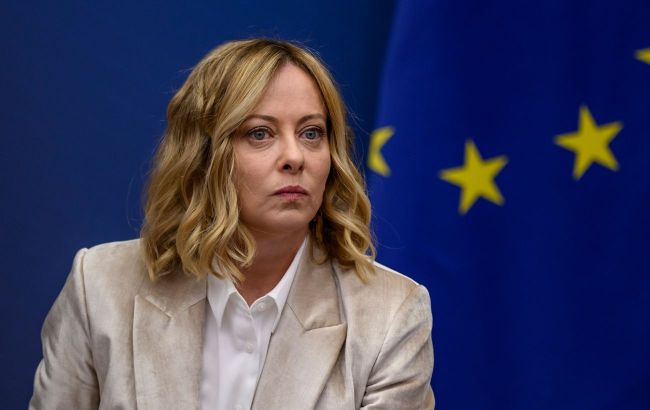 Photo: Italian Prime Minister Giorgia Meloni (Getty Images)
Italy’s Prime Minister Giorgia Meloni will put forward the candidacy of a special negotiator at the upcoming European Union summit to represent Brussels in the process of settling the Russia–Ukraine war, the Italian prime minister said this in comments to journalists during a press conference following the G7 summit in France.
Who could become the EU negotiator
During a conversation with the media on the sidelines of the G7 summit, Giorgia Meloni hinted at who she envisions for the role.
According to her, the European negotiator should come from a "medium-sized country," rather than one of the EU’s largest member states.
The Italian leader also added that during the G7 meeting, leaders reached an agreement with US President Donald Trump on issues related to Ukraine.
At the same time, she stressed that such understanding "cannot always be taken for granted."
Her official proposal regarding the candidate will be presented this week in Brussels. The next EU leaders’ summit is scheduled for June 18–19.
Peace talks with Russia and prospects for peace
Western leaders have recently intensified discussions on a diplomatic path to ending the war. In particular, German Chancellor Friedrich Merz, after talks with US President Donald Trump and G7 leaders, said that a first opportunity for peace in Ukraine has emerged.
At the same time, Germany’s Foreign Ministry suggested that peace talks on Ukraine could begin as early as this summer, as Russian President Vladimir Putin is allegedly beginning to seriously consider the issue amid a deadlock on the front line.
Despite this, Moscow’s real willingness to engage in dialogue remains highly uncertain. As French President Emmanuel Macron noted, Trump agreed with G7 leaders that Russia had shown no serious willingness to negotiate, and all previous US and EU efforts had proven futile.
At the same time, it became known that the President of the European Council had secretly contacted the Kremlin regarding Ukraine through his chief adviser, in an attempt to gauge the possibility of Russia’s involvement in future dialogue.