'It's phenomenal': NASA astronauts witness Moon details invisible from Earth

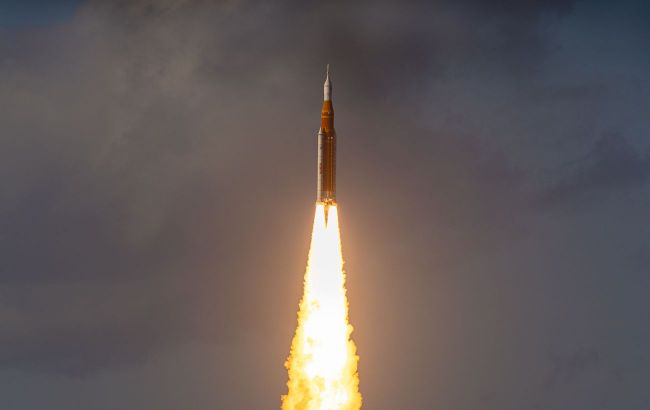 Photo: NASA crew sees on the Moon what’s impossible to spot from Earth (Getty Images)
NASA’s Artemis II astronauts have seen the Moon up close for the first time in more than half a century, revealing details invisible from Earth. The crew shared both their emotions and scientific observations, according to space.com.
“It is phenomenal. The moon we are looking at is not the moon you see from Earth whatsoever,” said Christina Koch, mission specialist and the first woman to fly to the Moon.
Mission commander Reid Wiseman, a former International Space Station astronaut, along with Victor Glover and Jeremy Hansen, became the first humans in over 50 years to see the Moon from such close range.
The crew transmitted not only their reactions but also detailed observations. They could clearly see craters like Tycho, Copernicus, and Reiner, as well as large basaltic plains known as maria. To improve visibility, they even turned off Orion’s cabin lights.
Of particular interest was the Eastern Basin, a massive crater on the Moon’s far side. “We can see over Orientale just with the naked eye. The moon is so bright,” Wiseman noted.
Koch highlighted the terminator line, the boundary between lunar day and night. Initially obscured by surface brightness, the terrain along this line later became visible, impressing the astronauts with its intricate details.
NASA scientists working with the crew praised both the quality of their observations and their emotional excitement. “You could hear the excitement in their voices. They were just beside themselves looking at the Moon,” they said.
About the Artemis II Mission
On the night of April 2, NASA successfully launched Artemis II, the first crewed mission to the Moon in over 50 years. The Orion spacecraft lifted off from Florida, beginning an eight-day lunar flyby before returning to Earth.
The four-person crew collects data on the Moon’s geology and terrain. Beyond scientific work, they had the rare opportunity to observe a total solar eclipse unavailable from anywhere on Earth.
A key mission goal is potentially breaking the record for the farthest humans have traveled from Earth. The current record, set by Apollo 13 in April 1970, is 400,171 km. NASA expects Orion to surpass this milestone, depending on trajectory and maneuver timing.
Unlike the Apollo missions of the 1960s–1970s, NASA is livestreaming much of Artemis II, allowing real-time observation of the crew at work. Overhead cameras show astronauts monitoring screens, using mobile phones, and operating spacecraft controls.
On April 4, NASA released stunning photos of Earth from the mission.